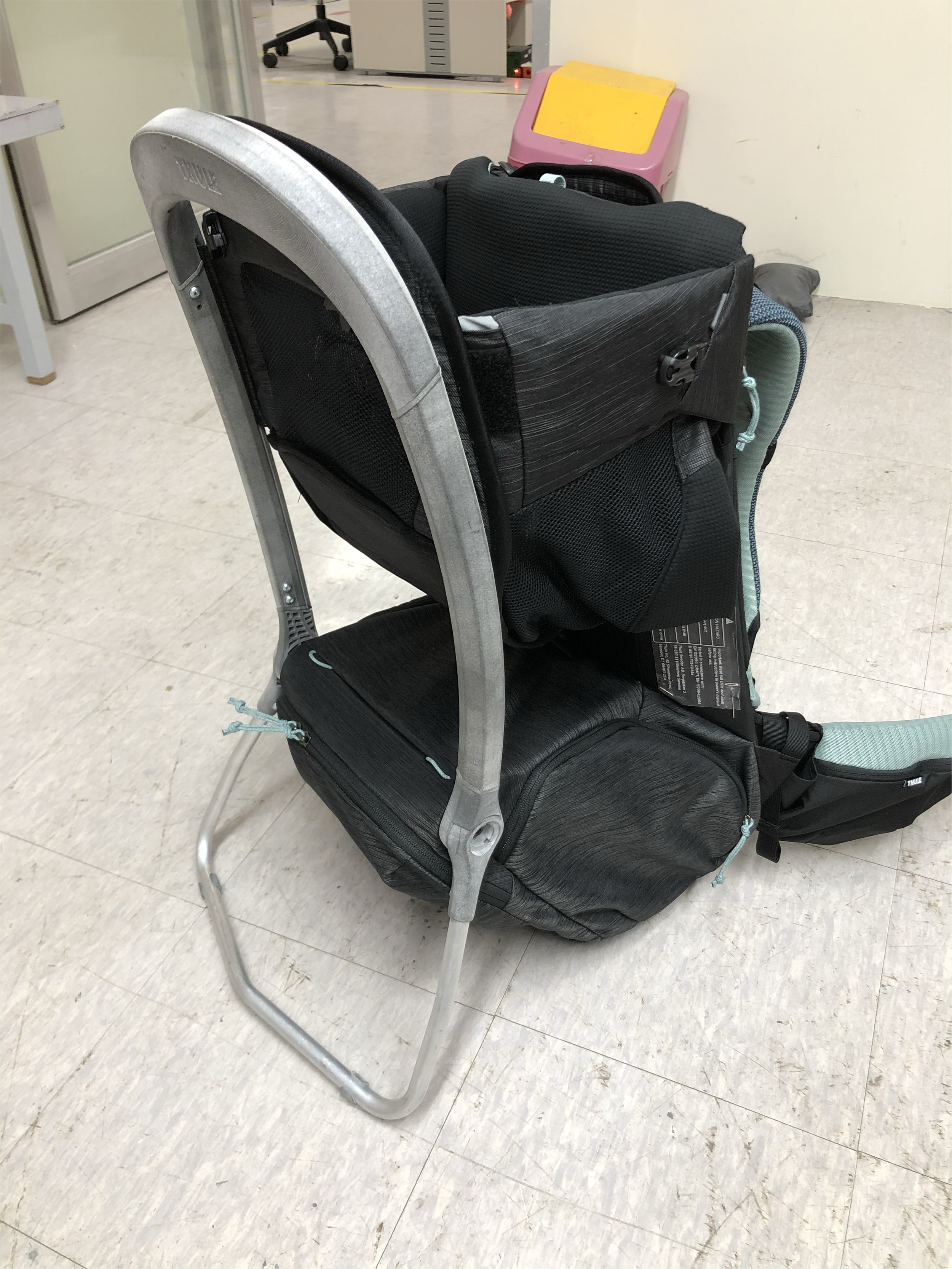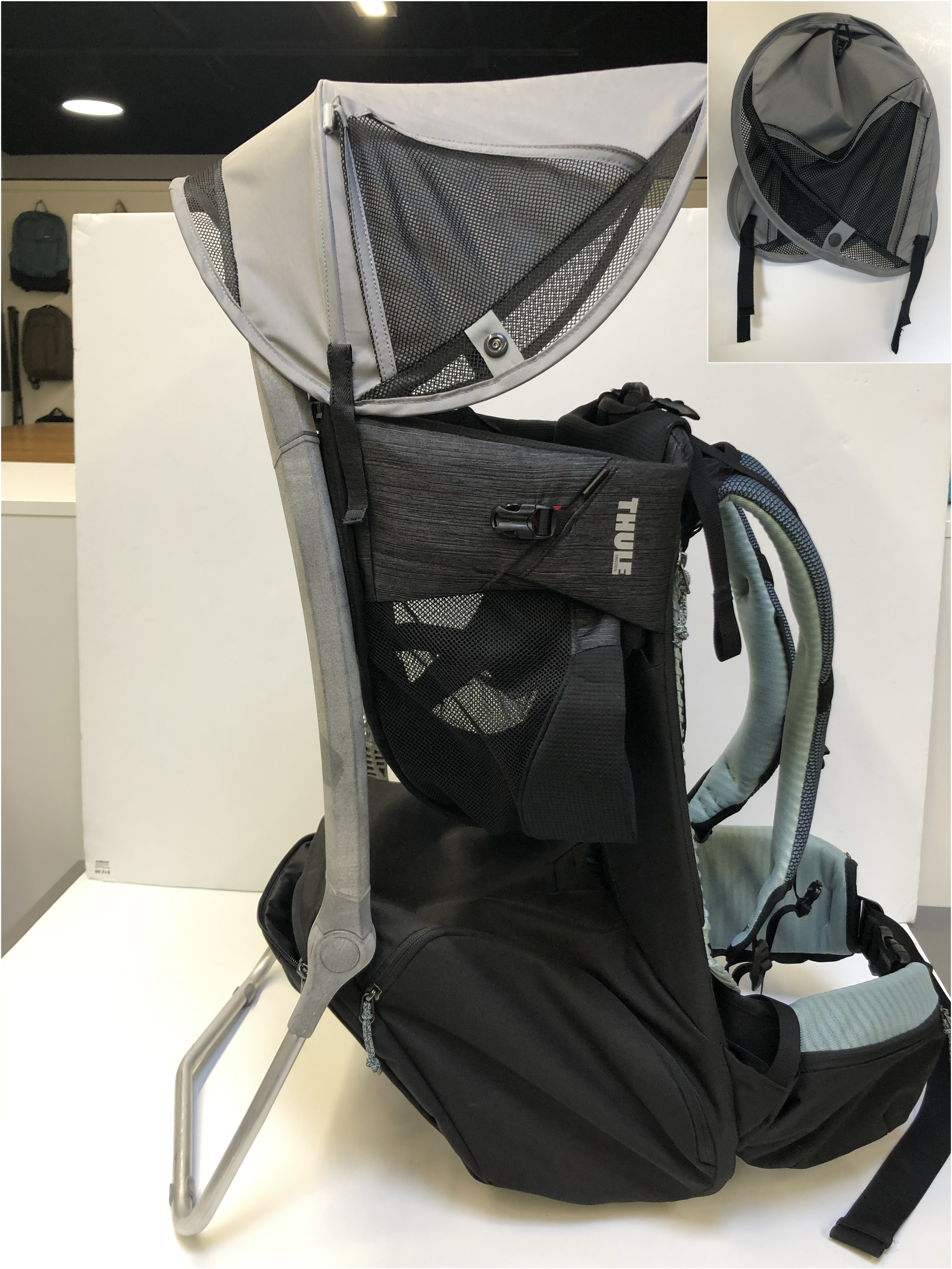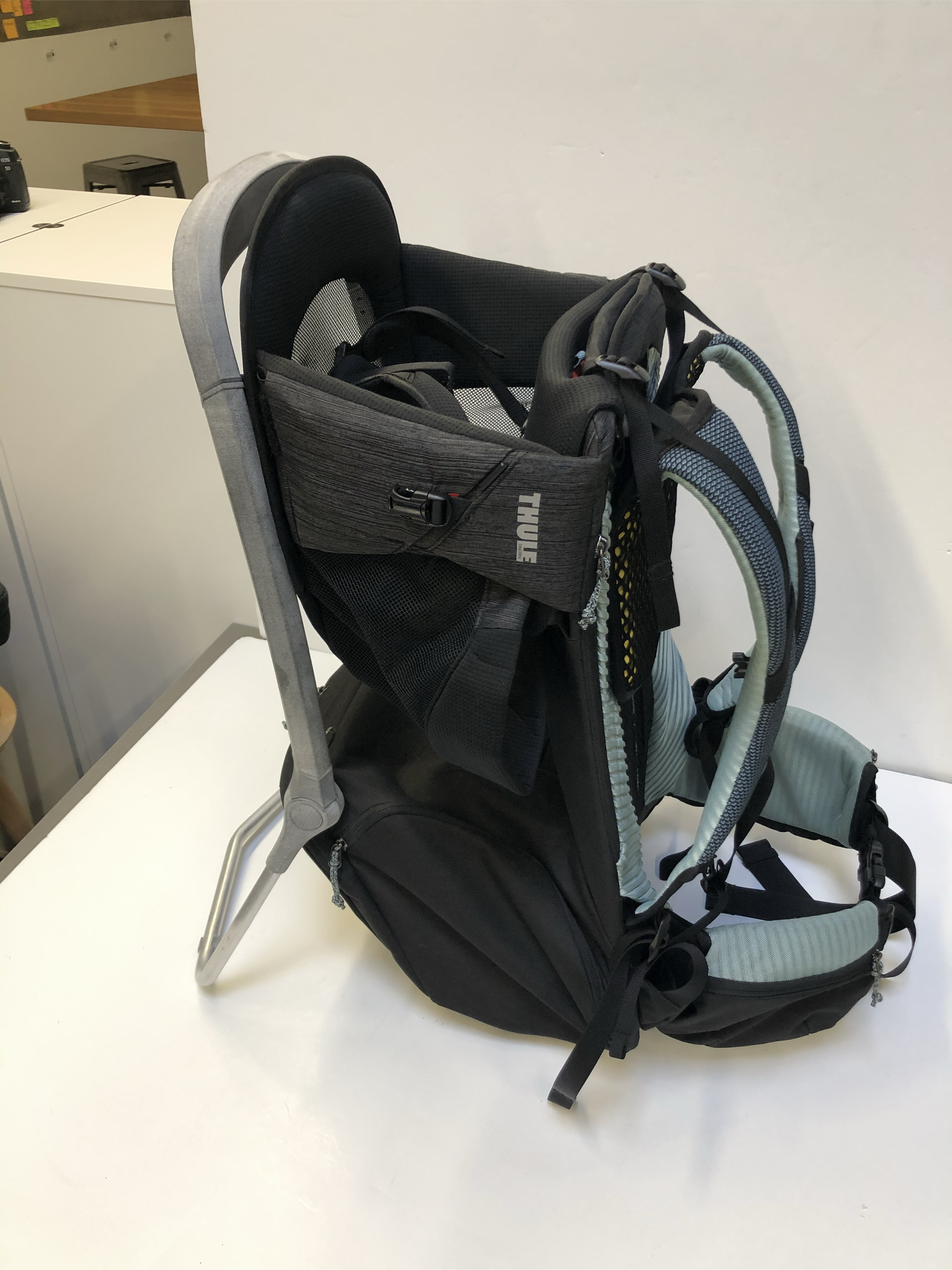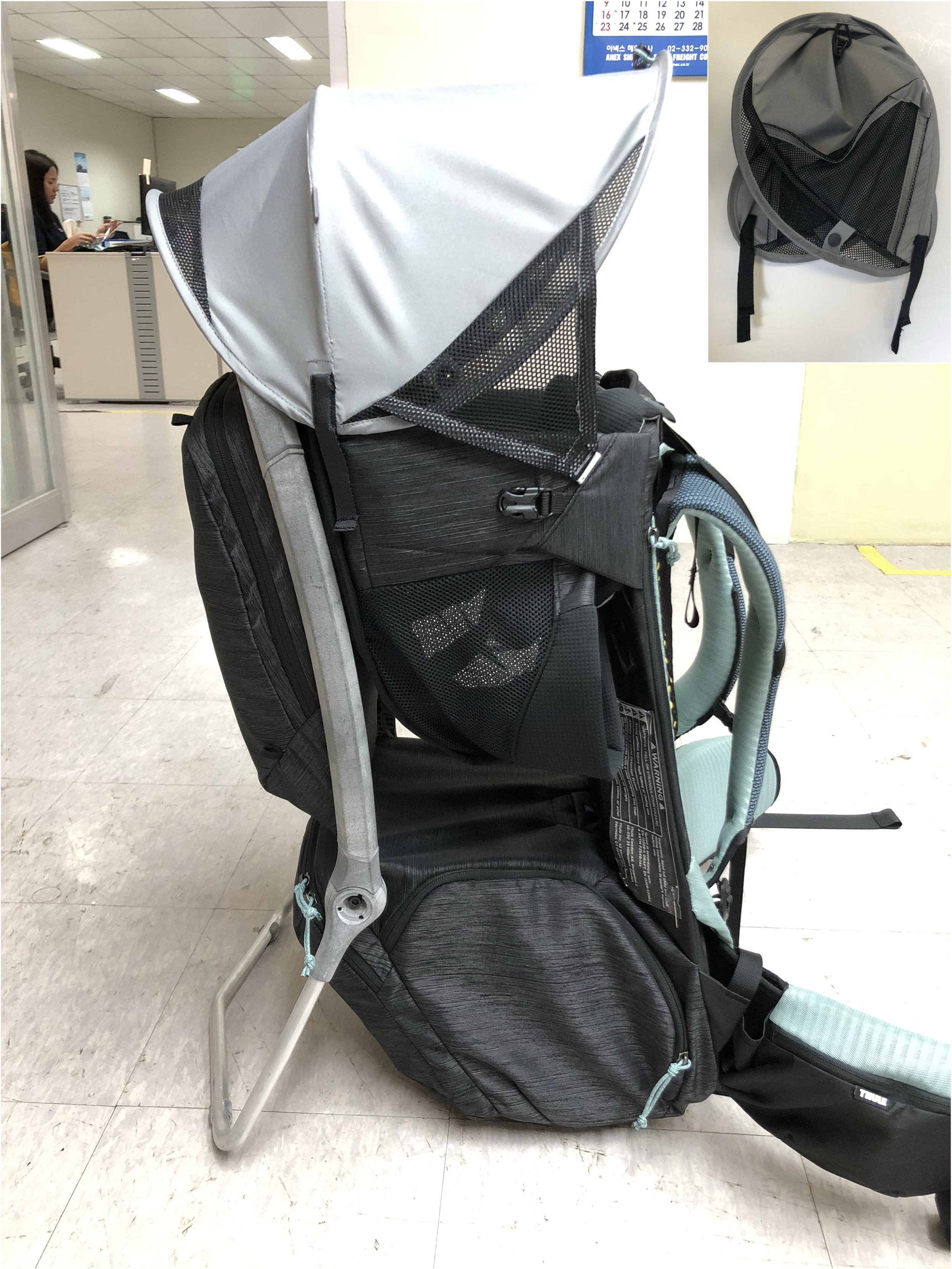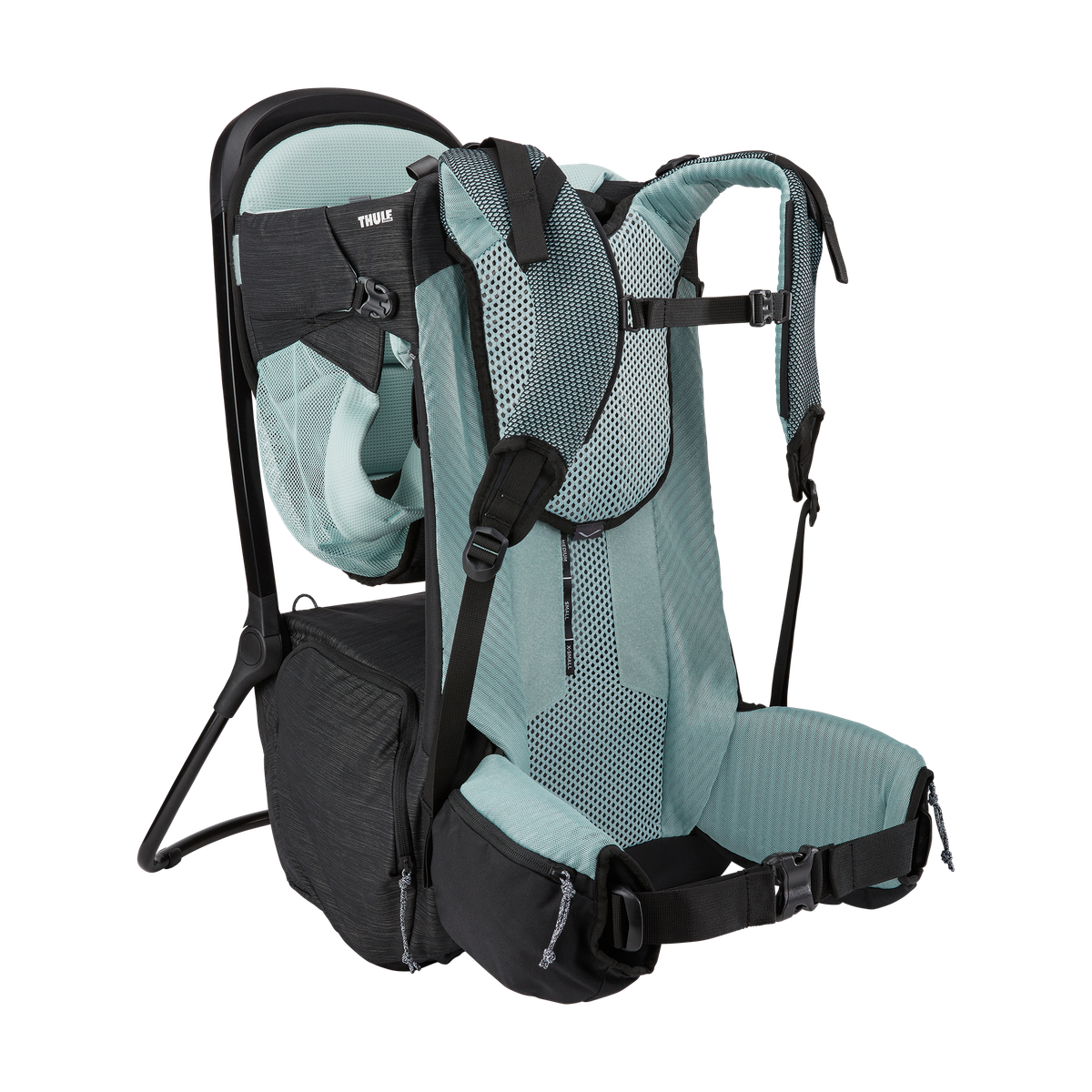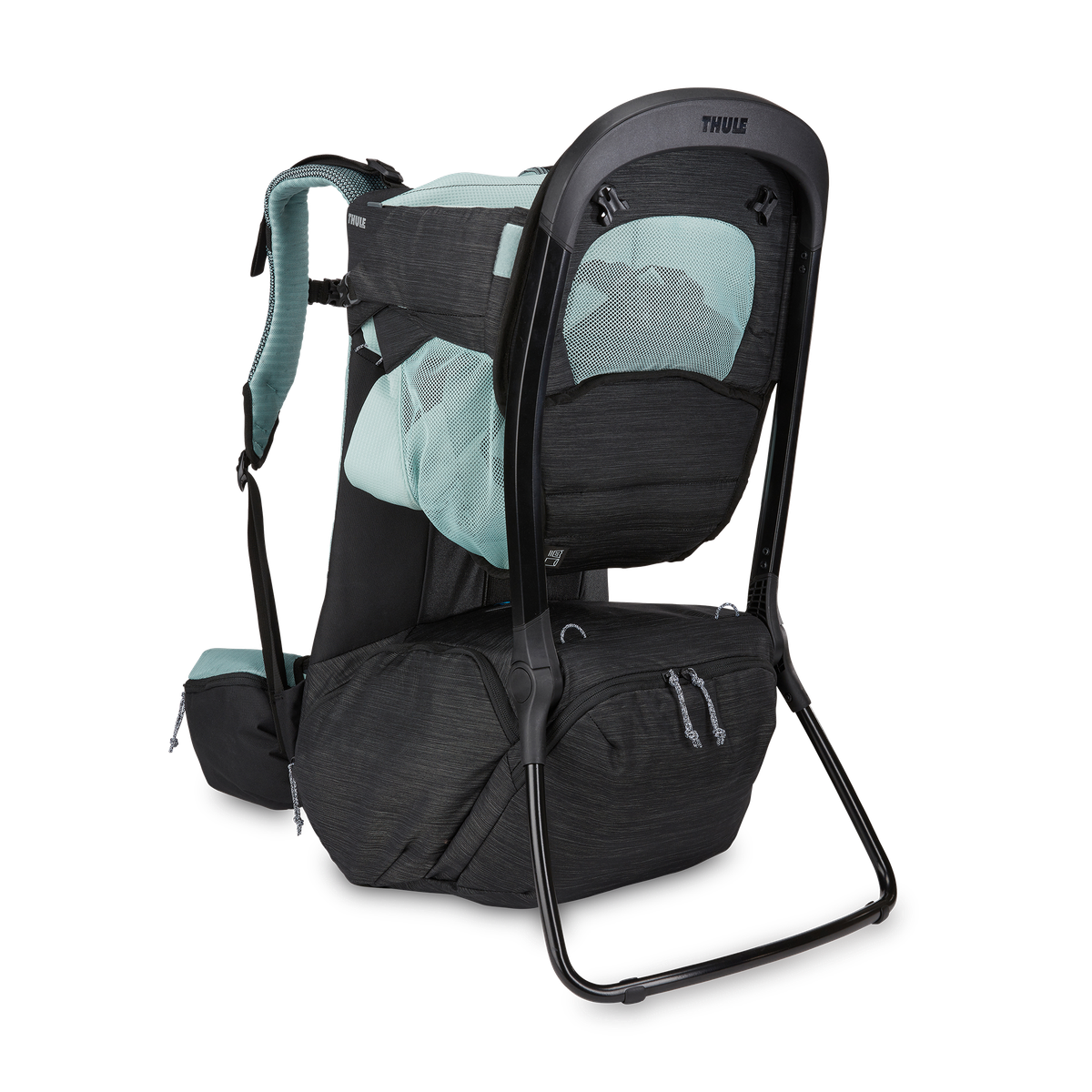
THULE SAPLING
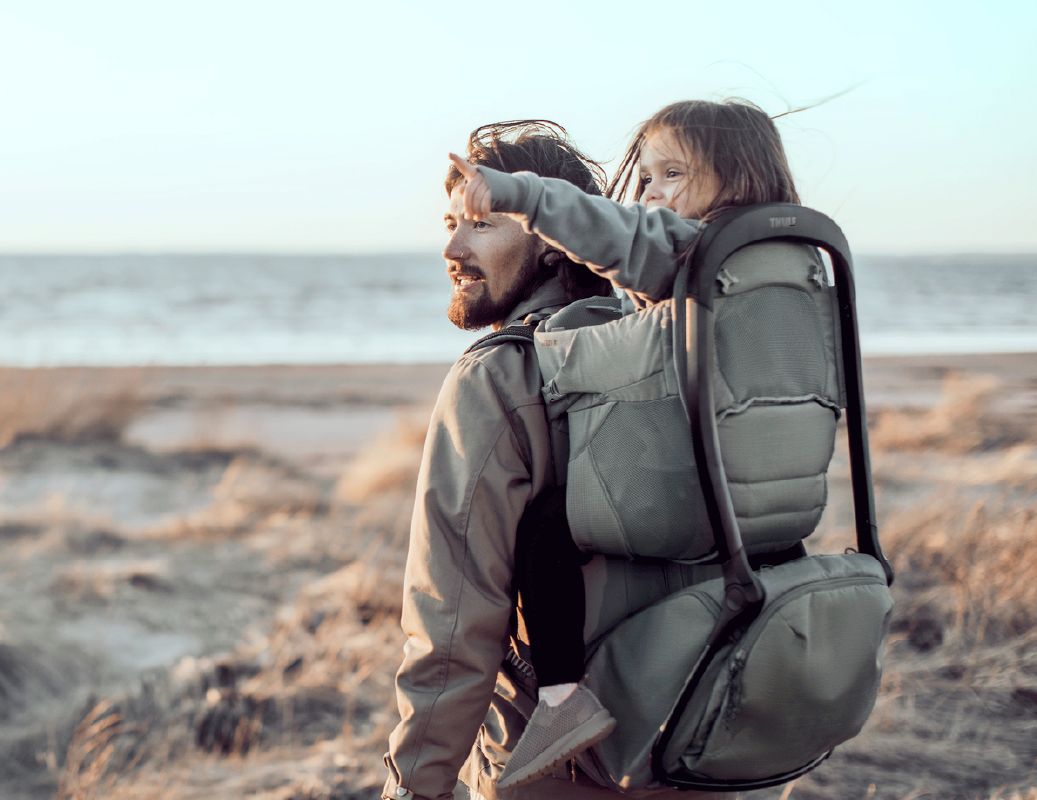
THULE SAPLING DESIGN OBJECTIVES
01 RETHINK the child carrying backpack by improving usability and reducing complexity, resulting in greater comfort and safety for the child and parent.
02 Integrate a top of the line carry system (backpack) into the child carrying segment
03 Look for opportunities to leverage the Thule Design aesthetic into the product in a way that improved safety, weight and function of the carrier.
04 Create a modular system, where features could be added as needed, reducing SKU count.
Spring 2022 Launch
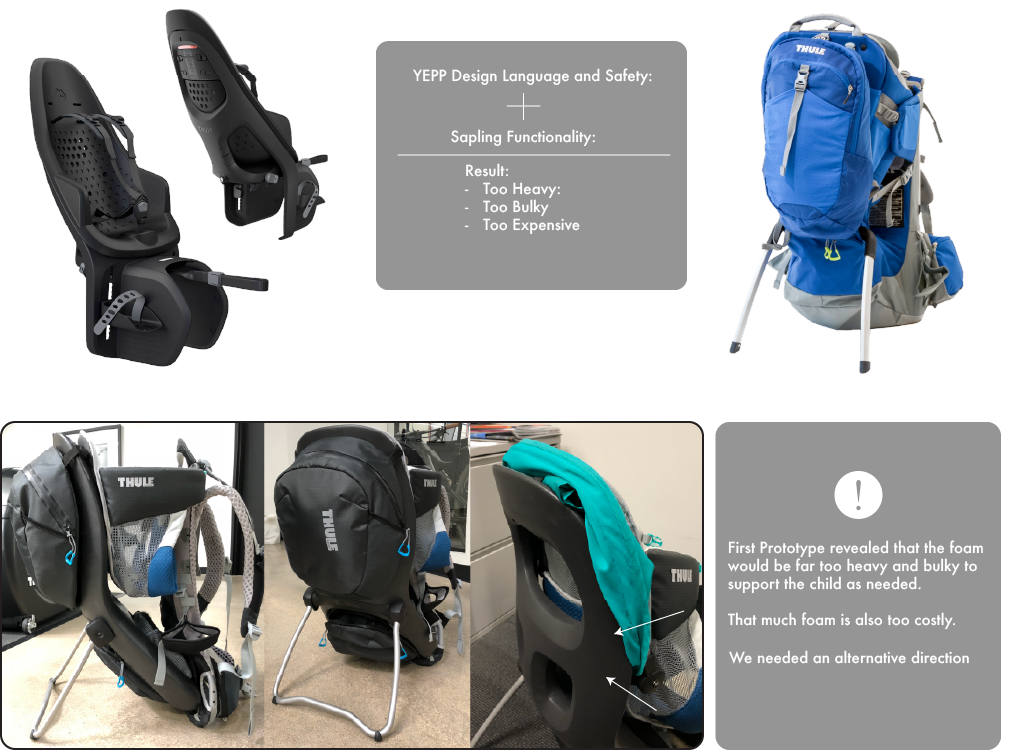
Early Project Failure
Our Initial Design Exploration- (outsourced to a consultancy-
https://www.modyn.com) gave us a few great concepts and a few concepts that were not workable.
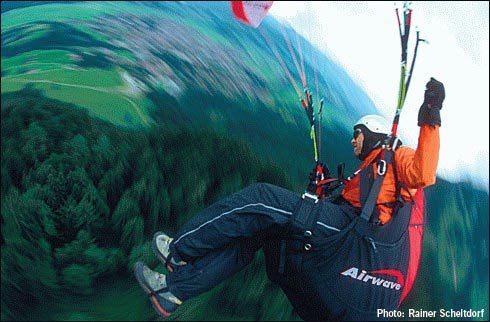
Paraglider-style seating
Great concepts:
Rather than make the seat from Foam as on the Yepp, we opted for Paraglider-style seating, which would support the child better than the diaper-style seating in current carriers. The seat is inspired from the bucket-style seating and adjustment of paragliders
Not Workable Concepts:
Injection molded foam was in-line with Thule Aesthetic Design Standards, but proved to be too weak, thus adding extra bulk and extra cost to get the strength needed. It wasn’t the right material for the job.
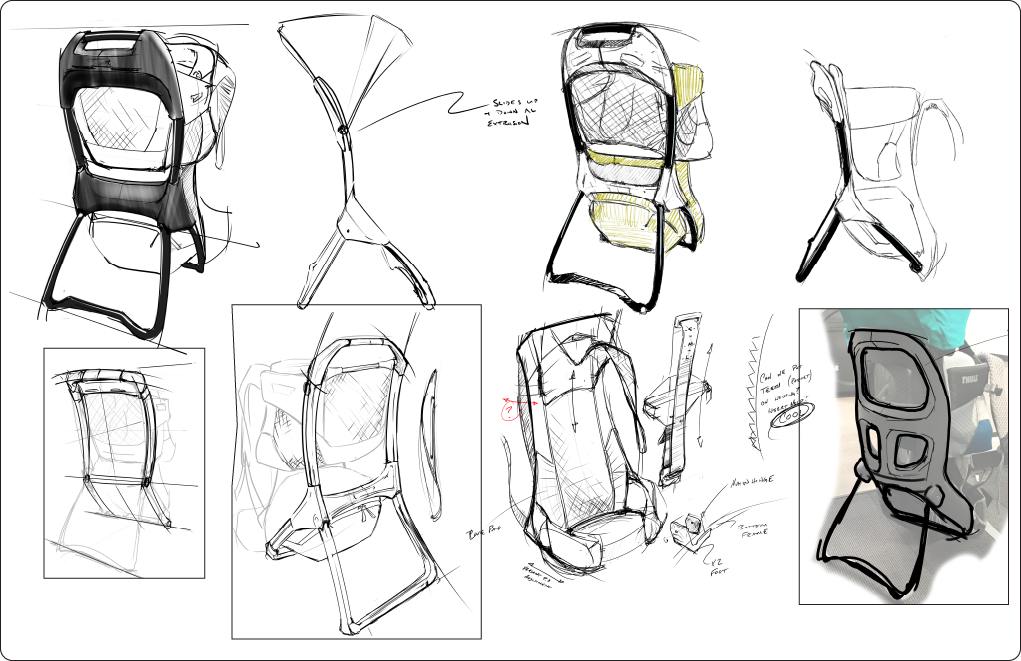
Our next steps included a lateral design exploration with the following guidlines.
01 Keep the paraglider style seating, making it removable and washable.
02 Changing the foam support frame to something that would support the necessary weight and keep the child safe.
03 Design for manufacturing realities and cost contraints.
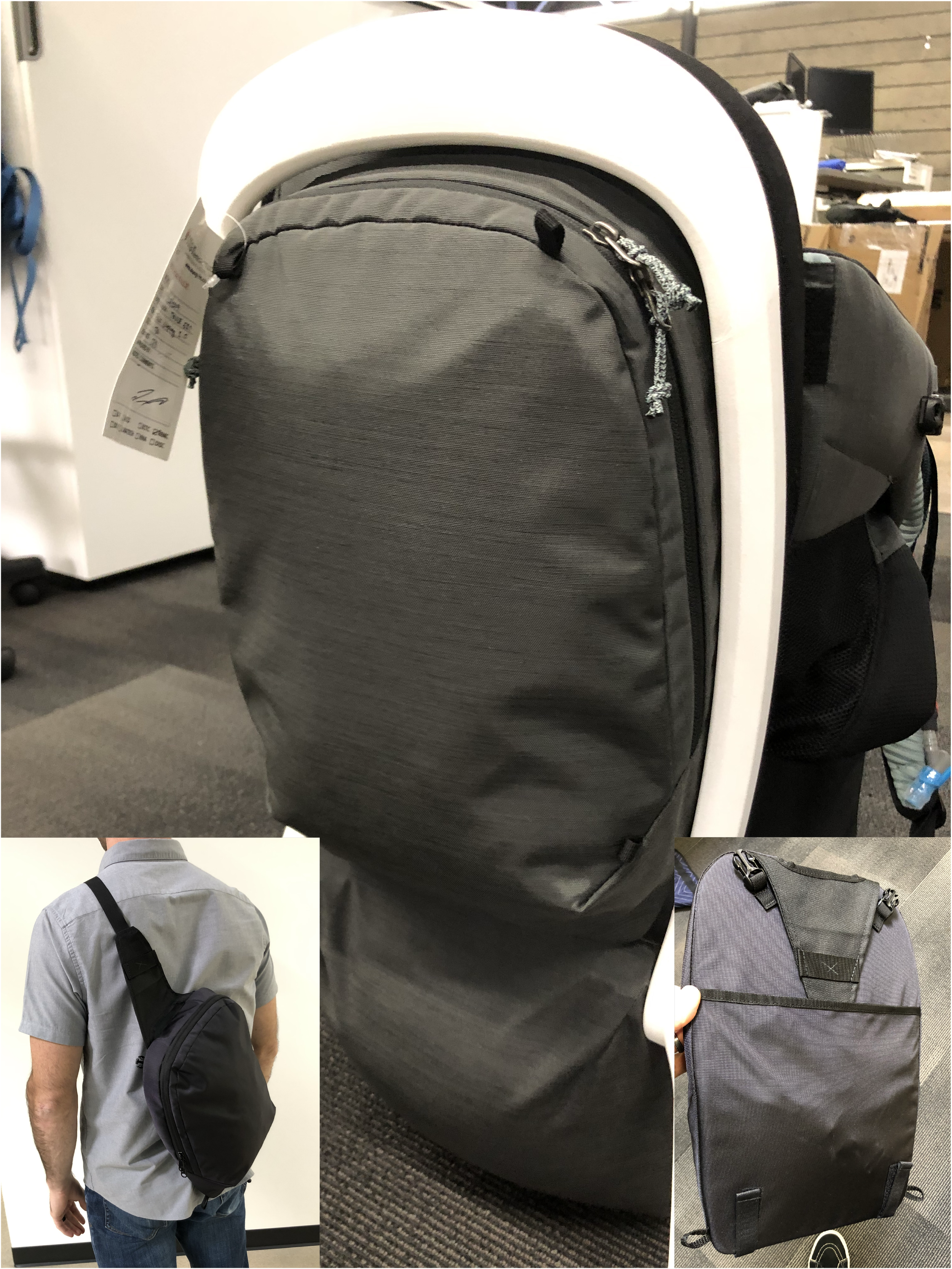
04 Add needed features like removable backpacks and under-seat storage.
05 Complete design of the carry system, adjustment systems, and sunshade system.
Design Refinement
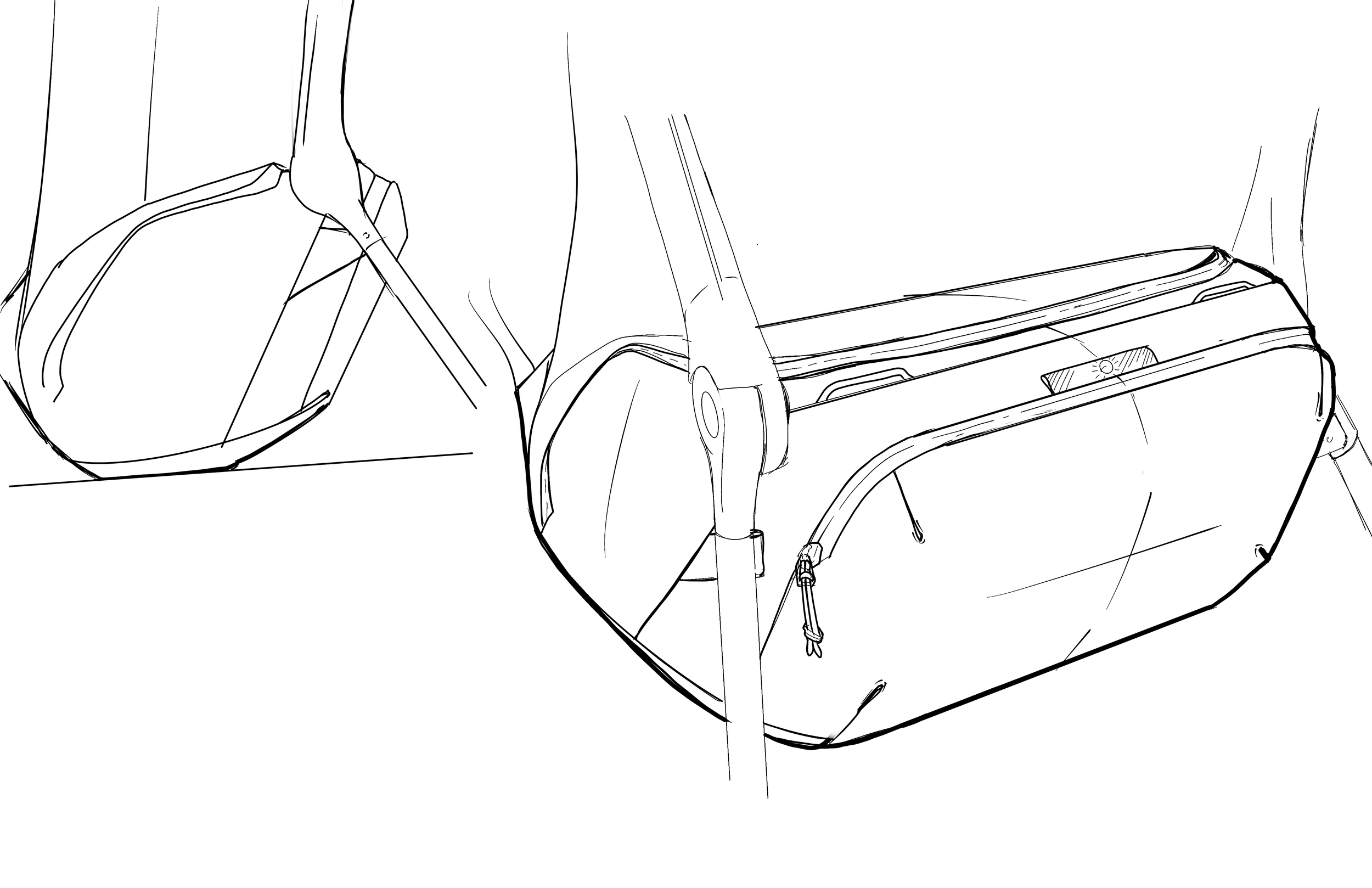
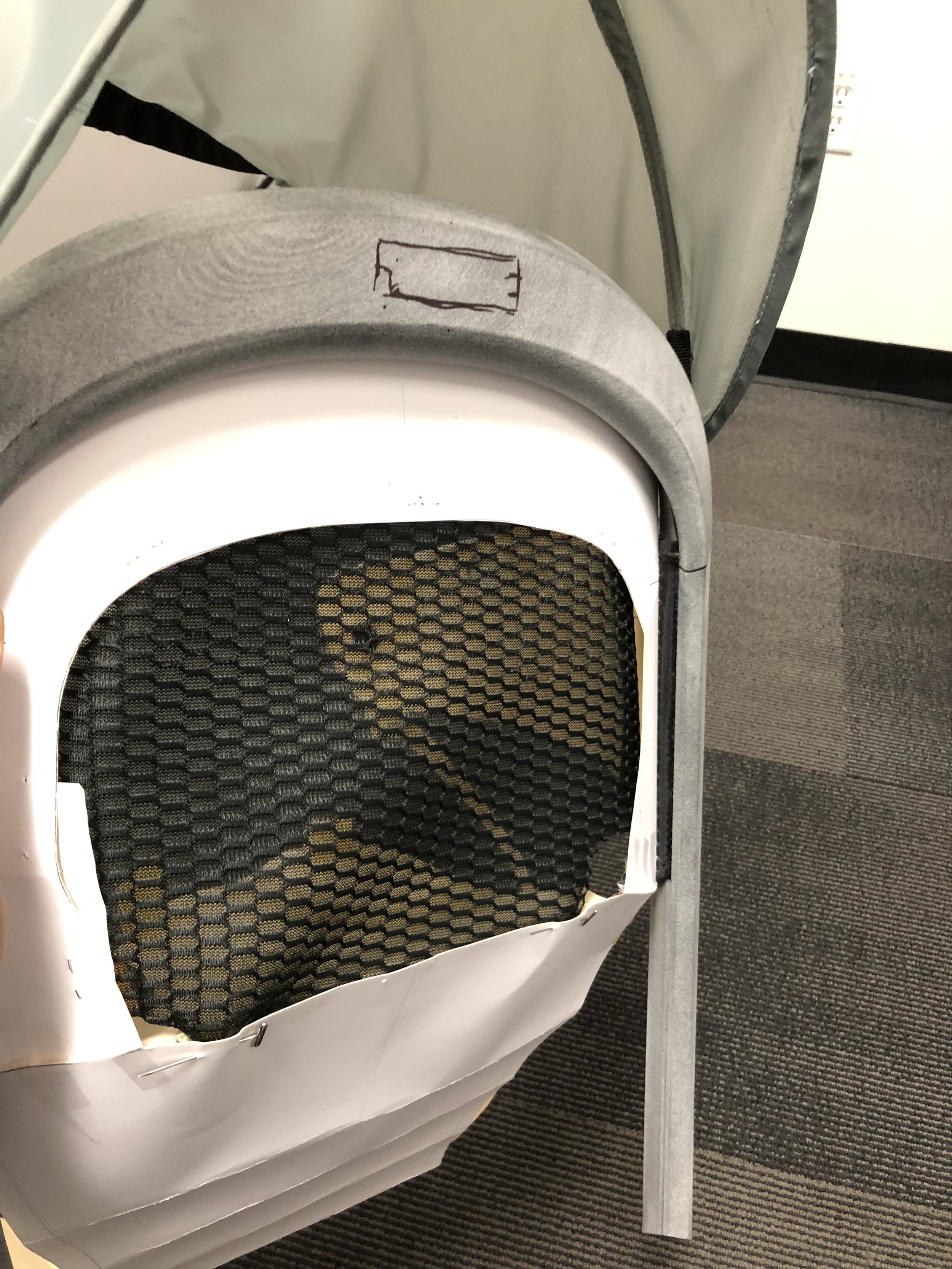
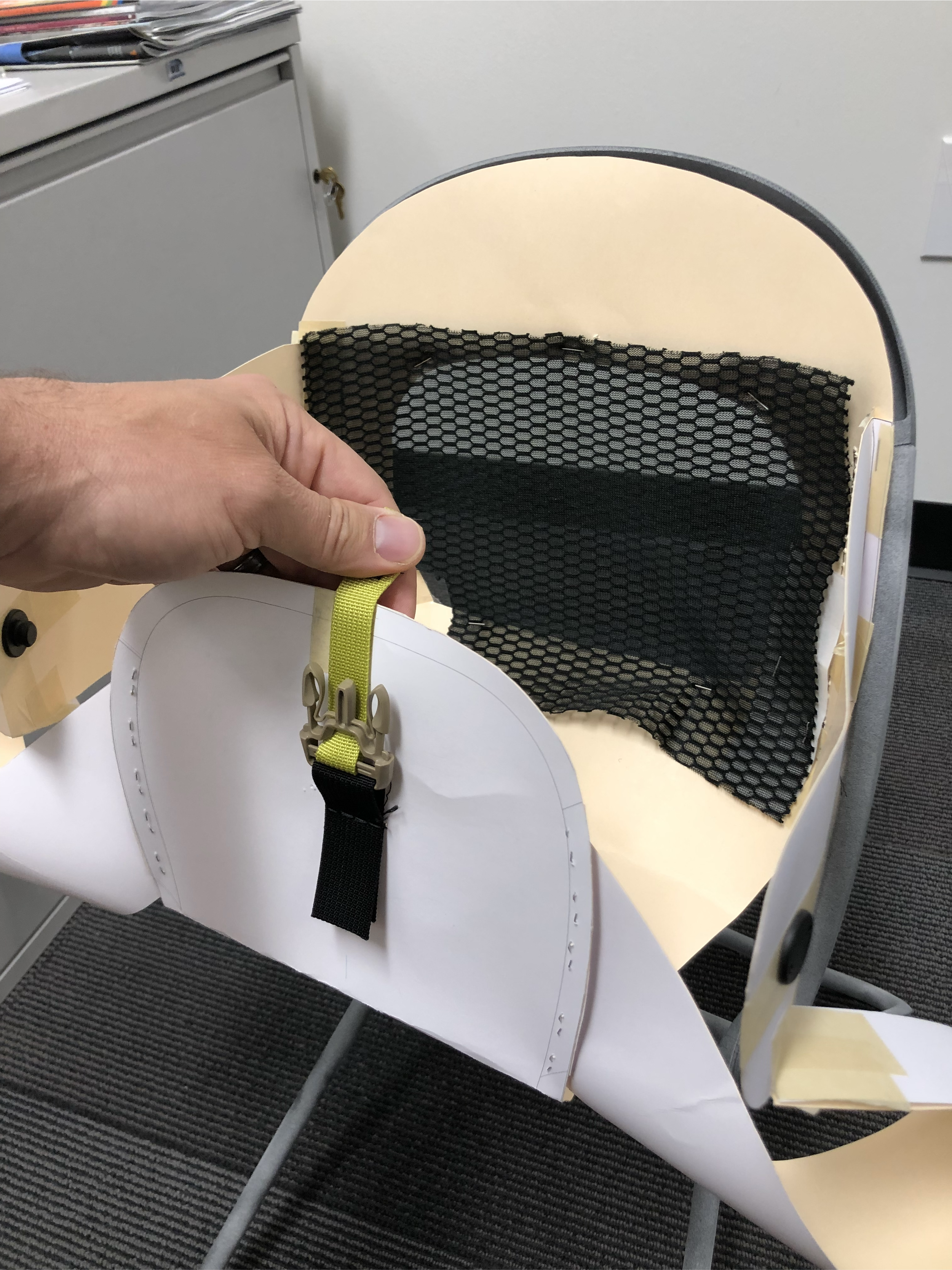
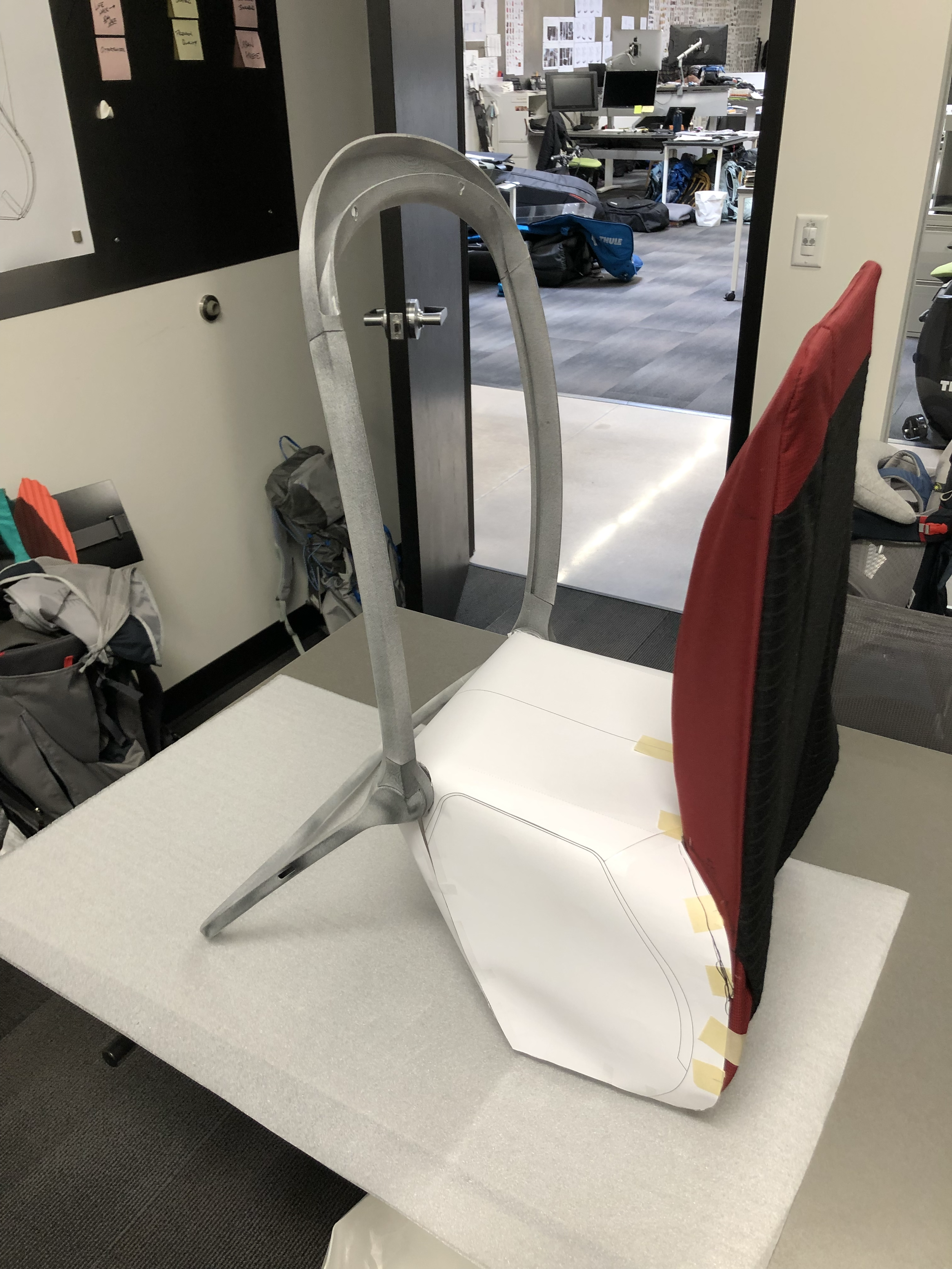
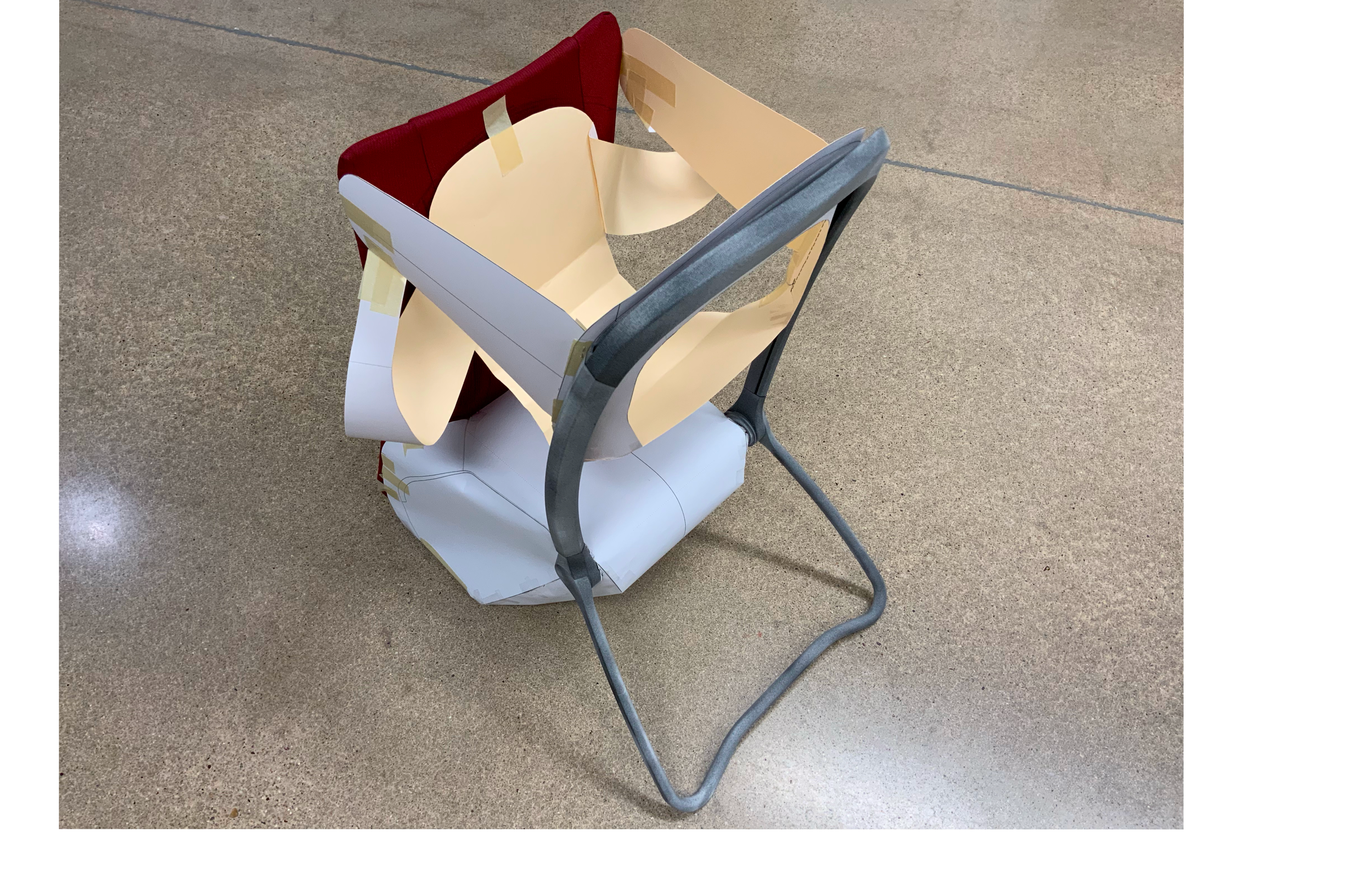
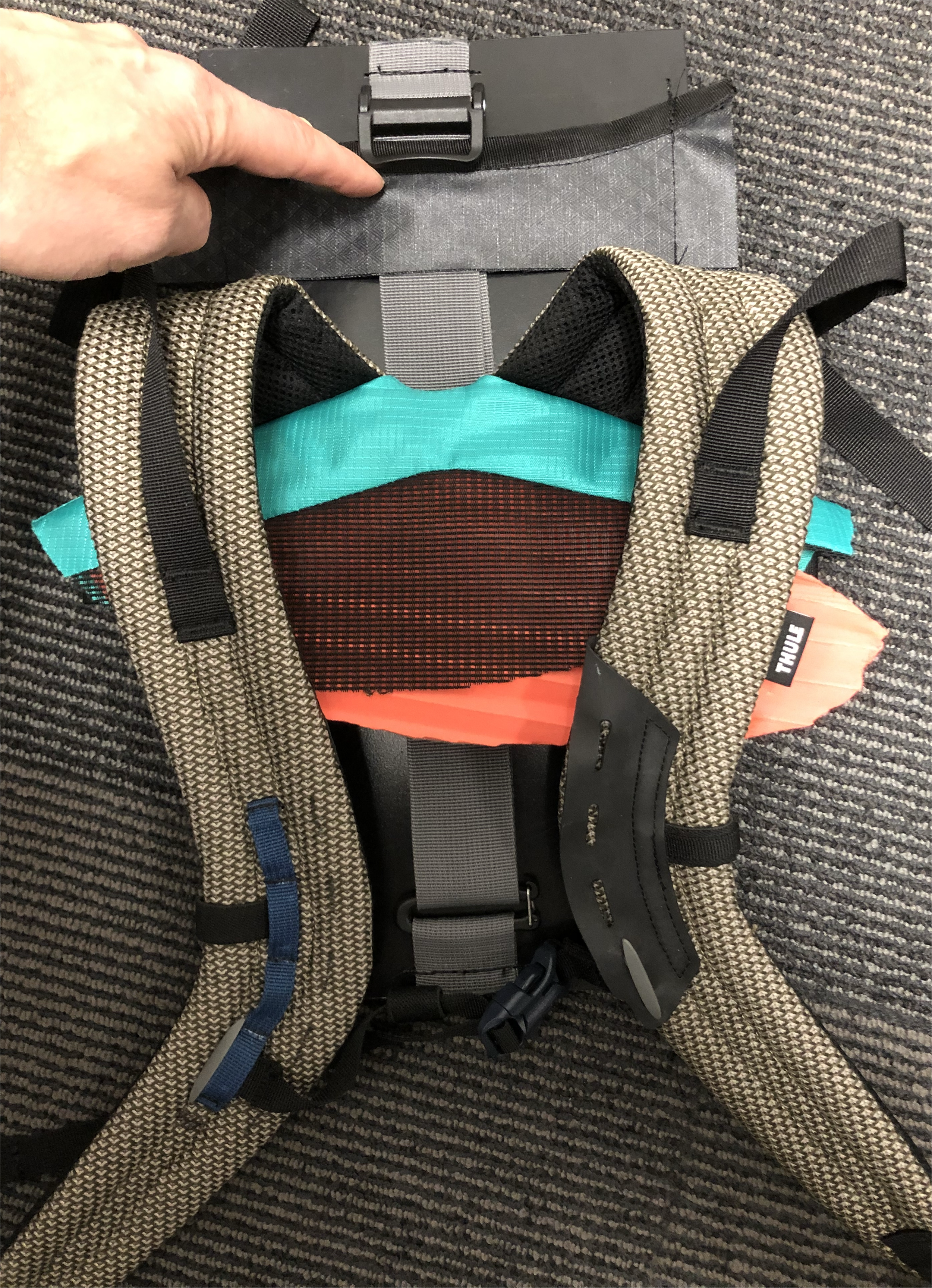
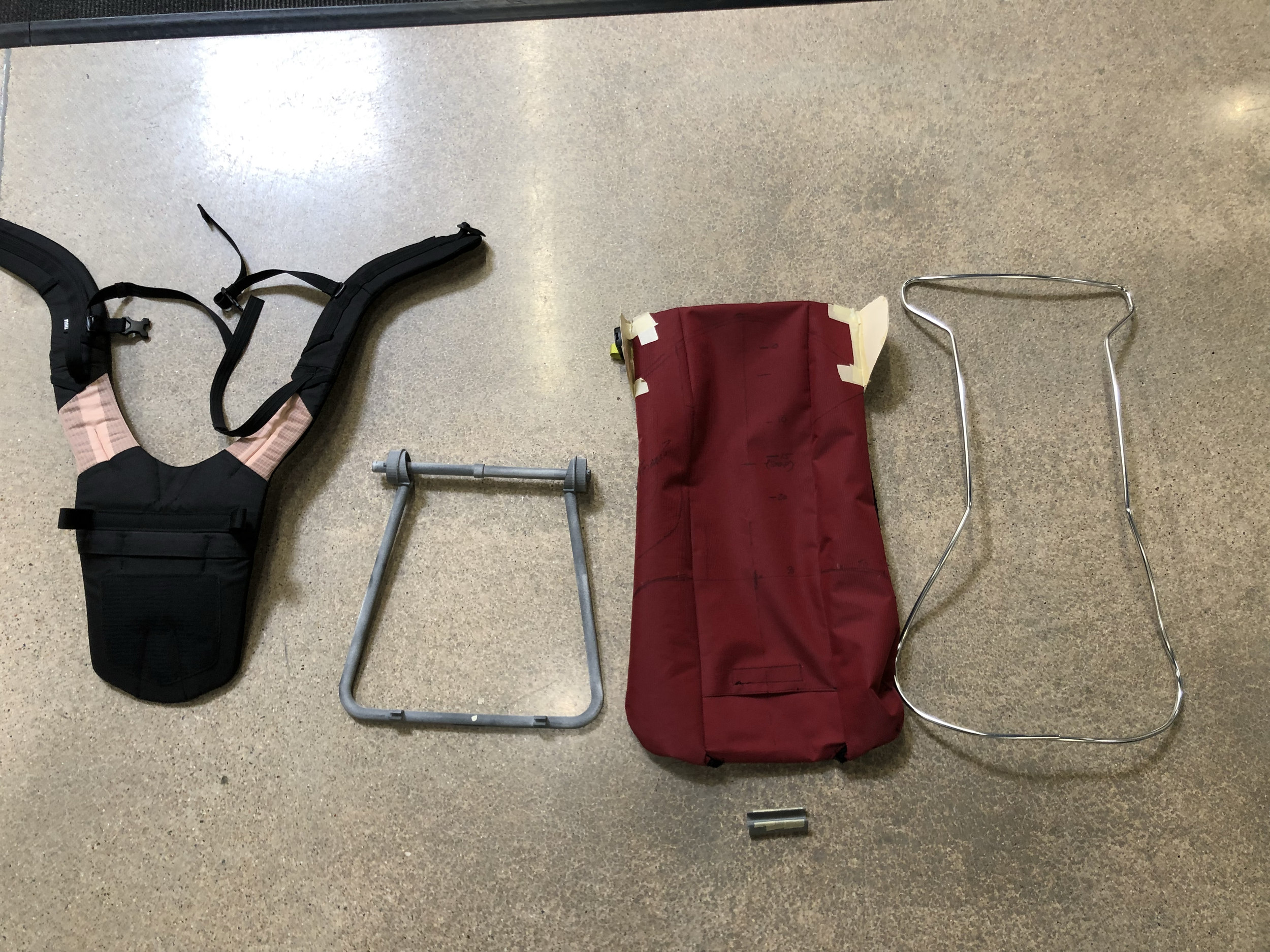
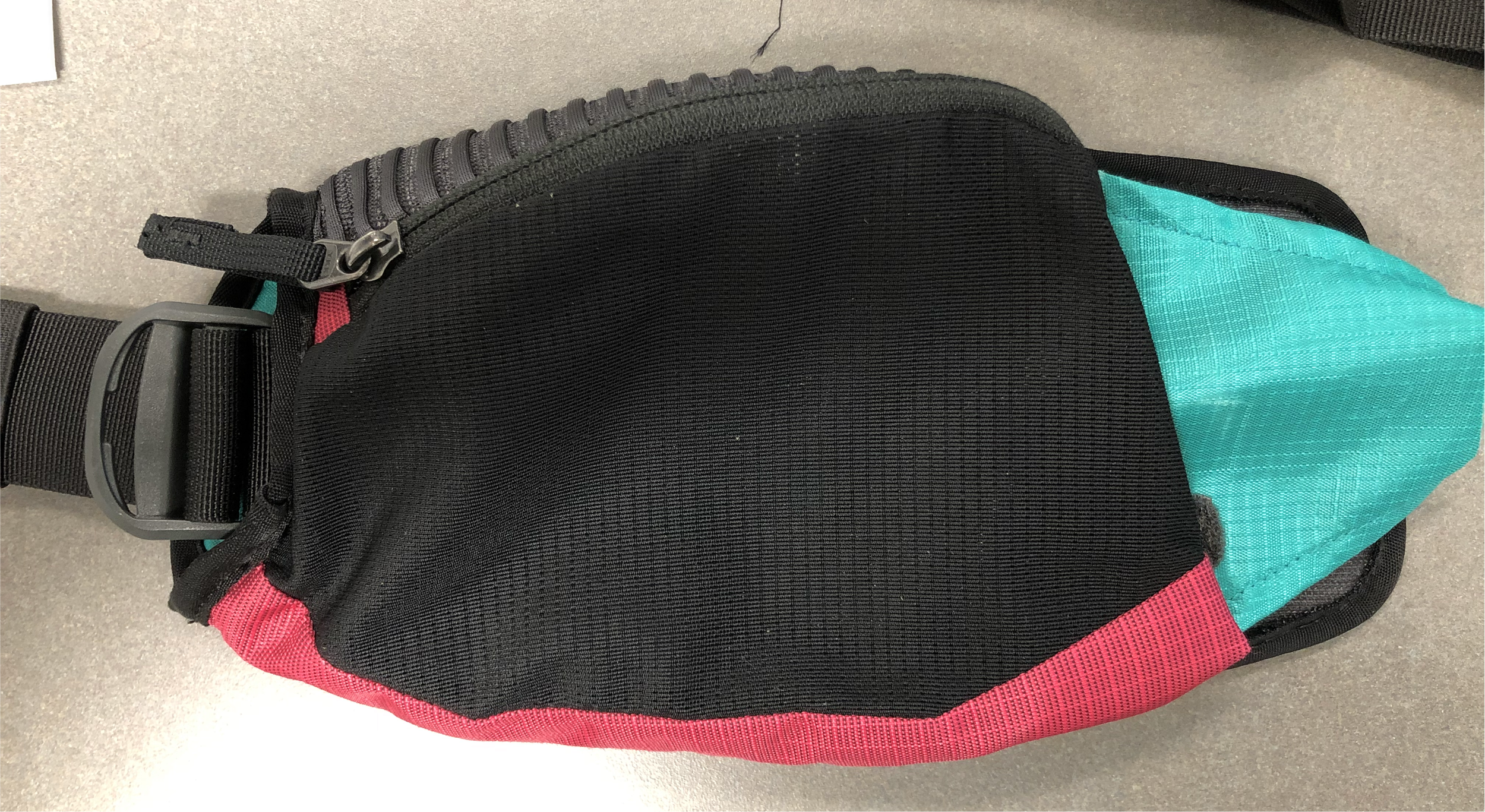
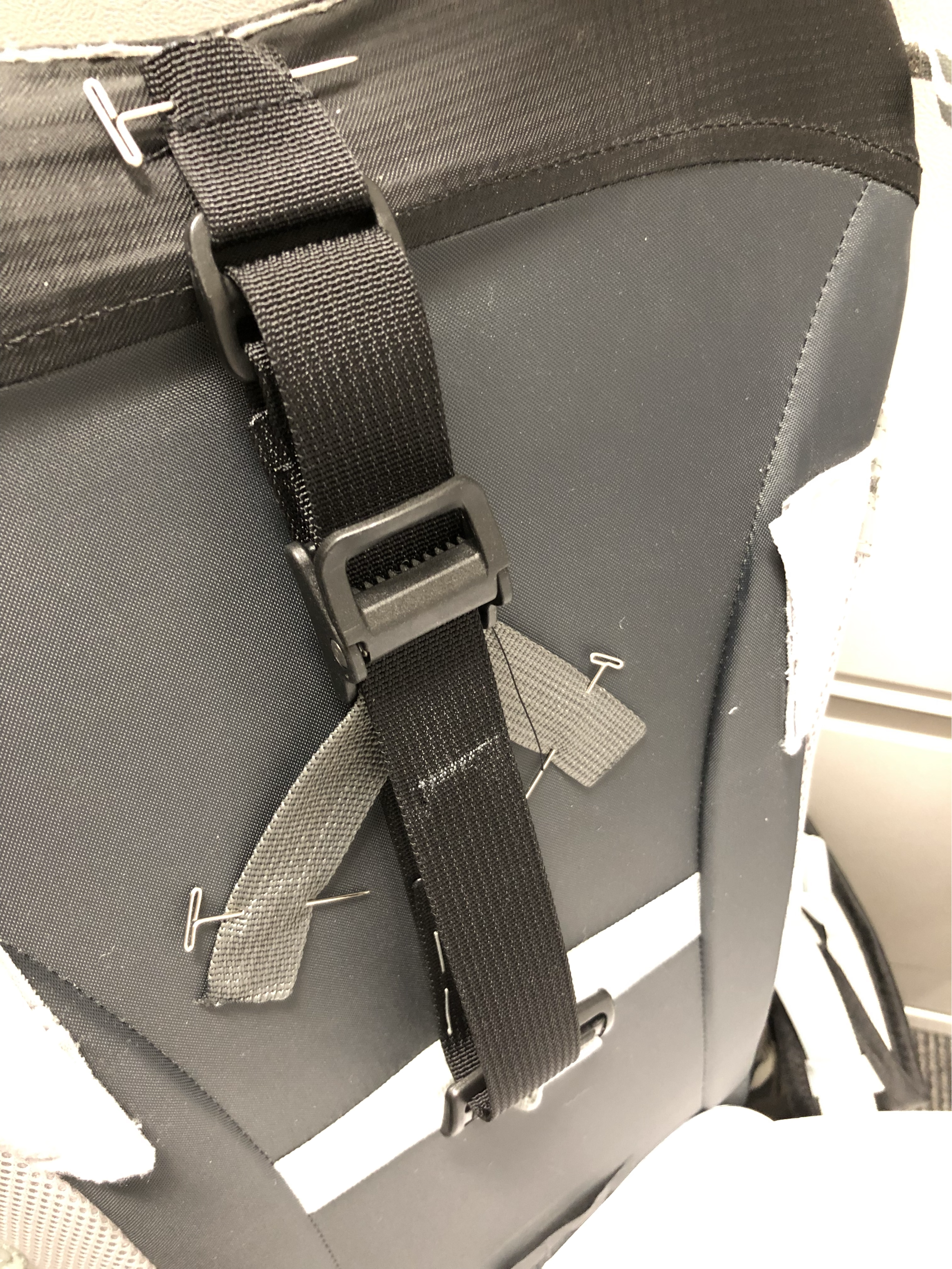
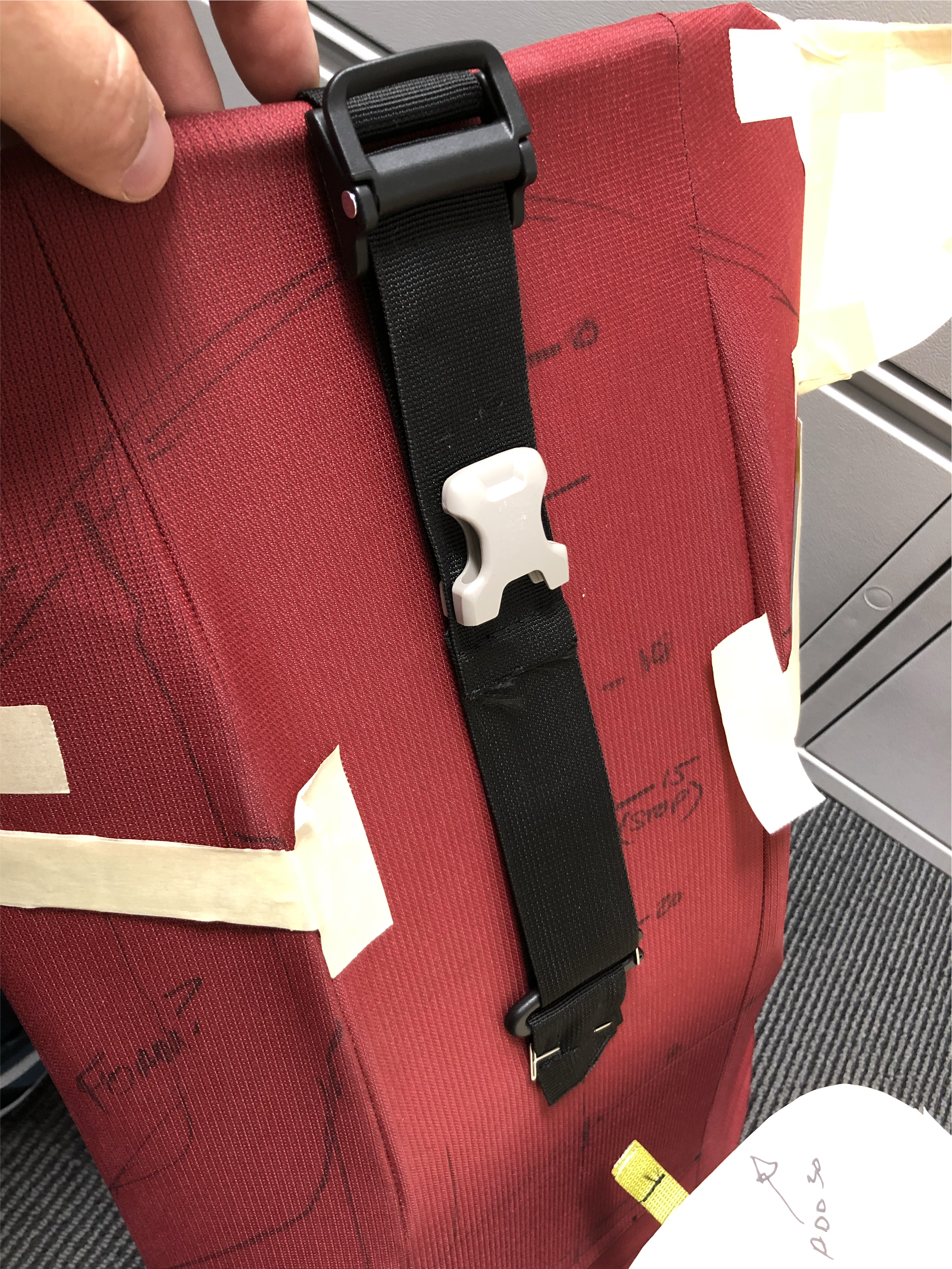
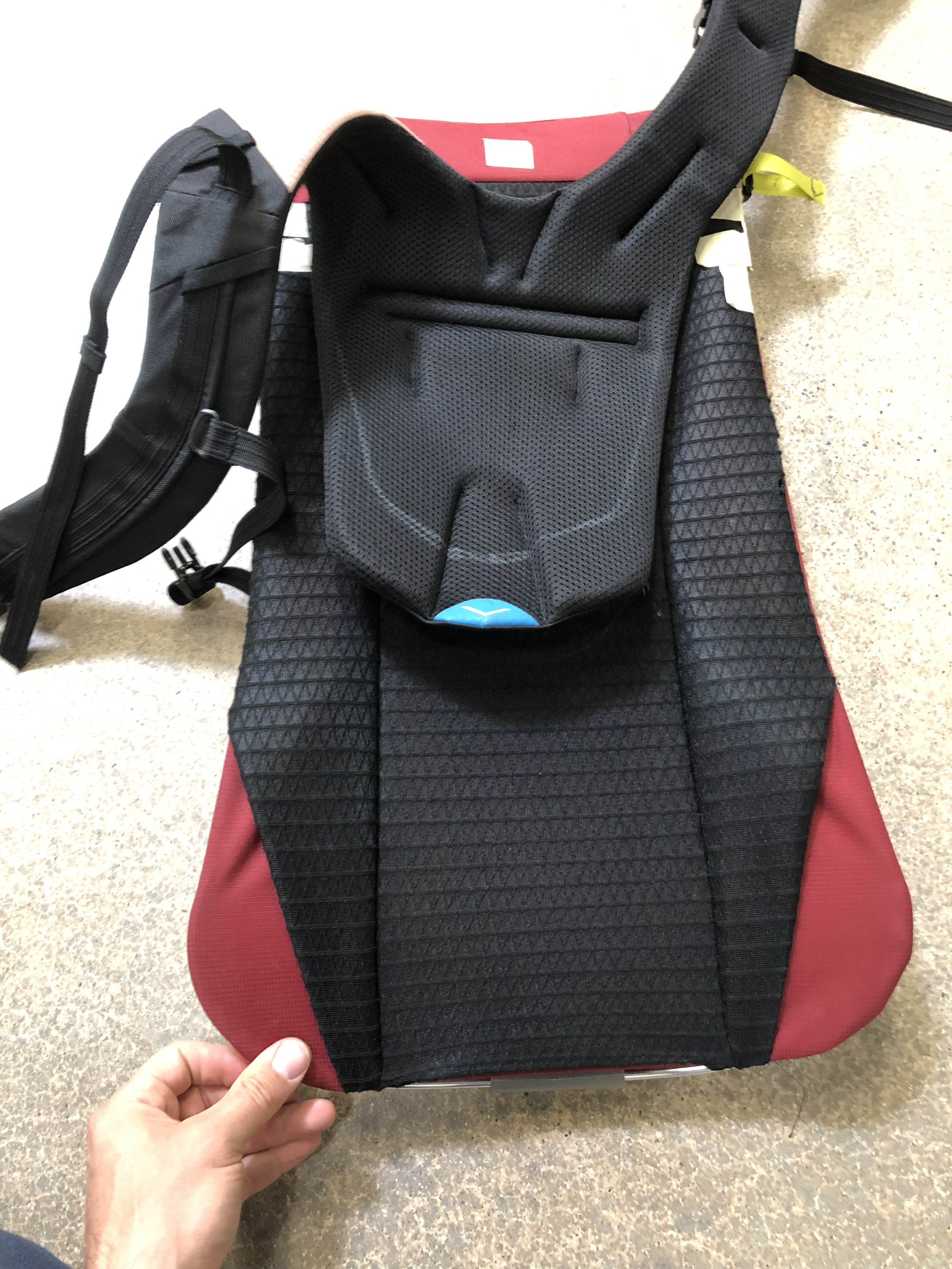
To better understand the complexity of construction- we built fast prototypes to work on interfaces of various compontents and functionality of the adjustments. With a 3D printed frame, this built the underlay for our first complete prototype of the new concept.
These prototypes all varied in fidelity- from sewn subassembly constructions to oaken paper/masking tape to 3D prints, we were able to fail fast and keep our project on track.
First Complete Prototype
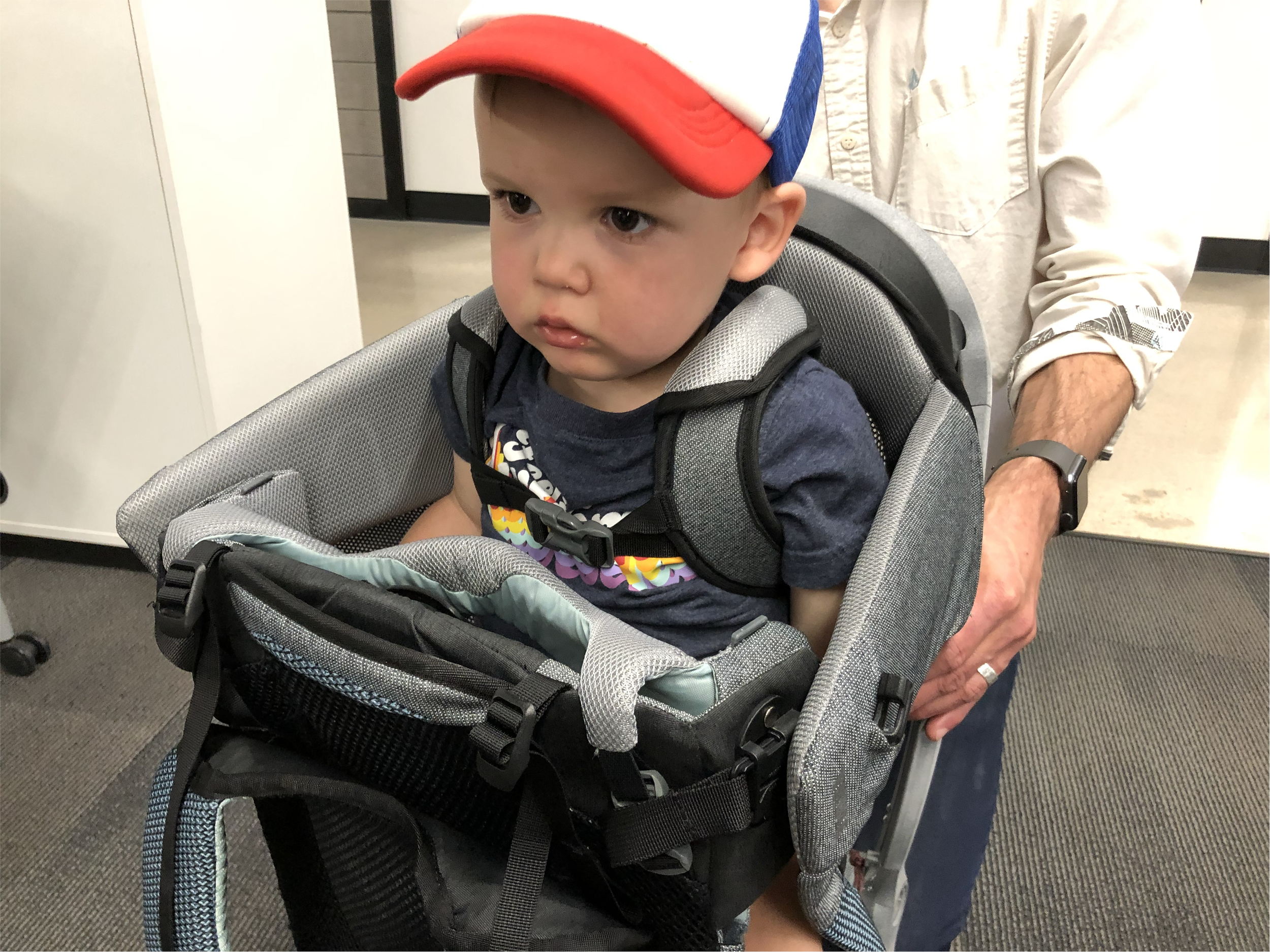
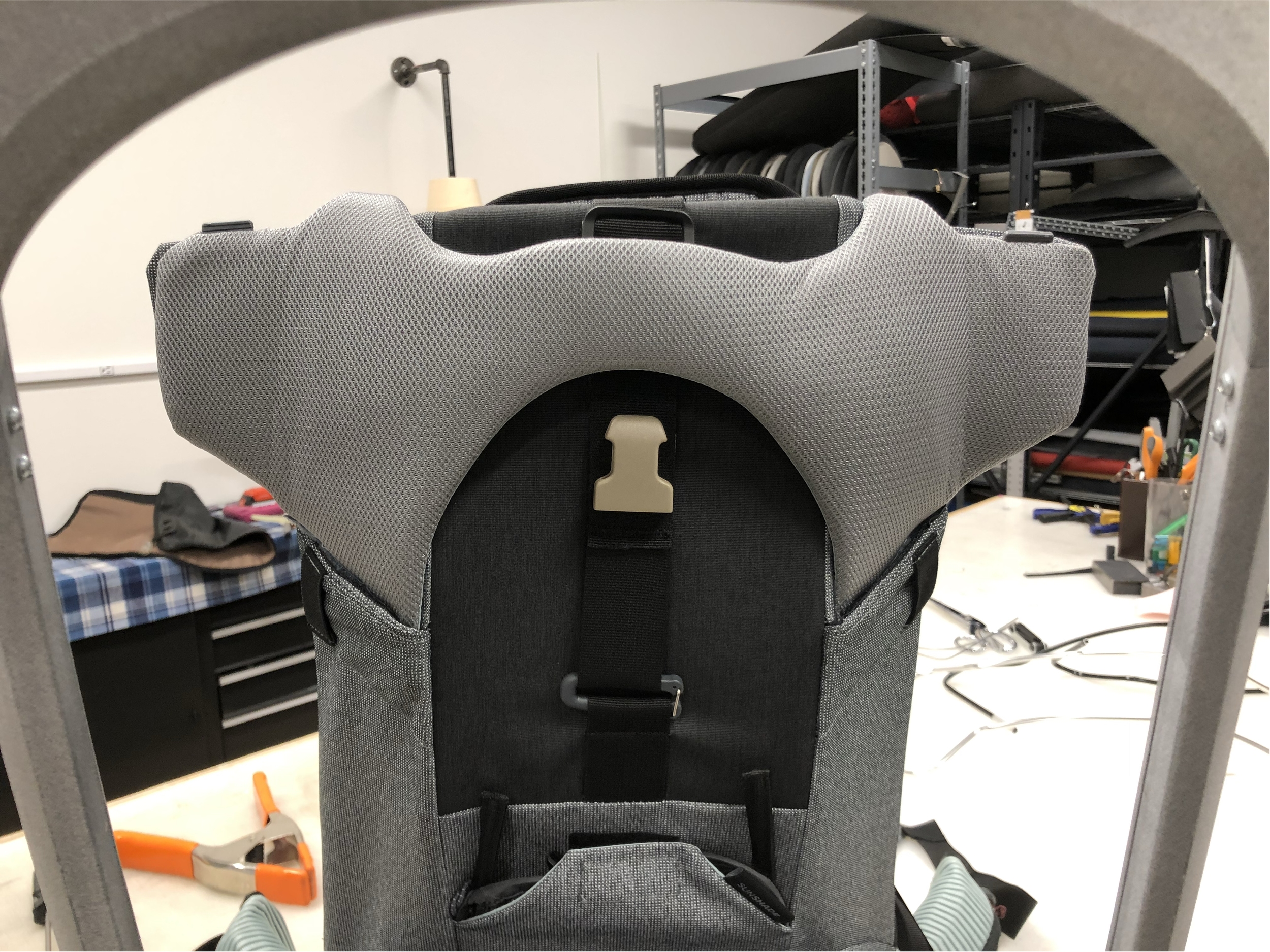
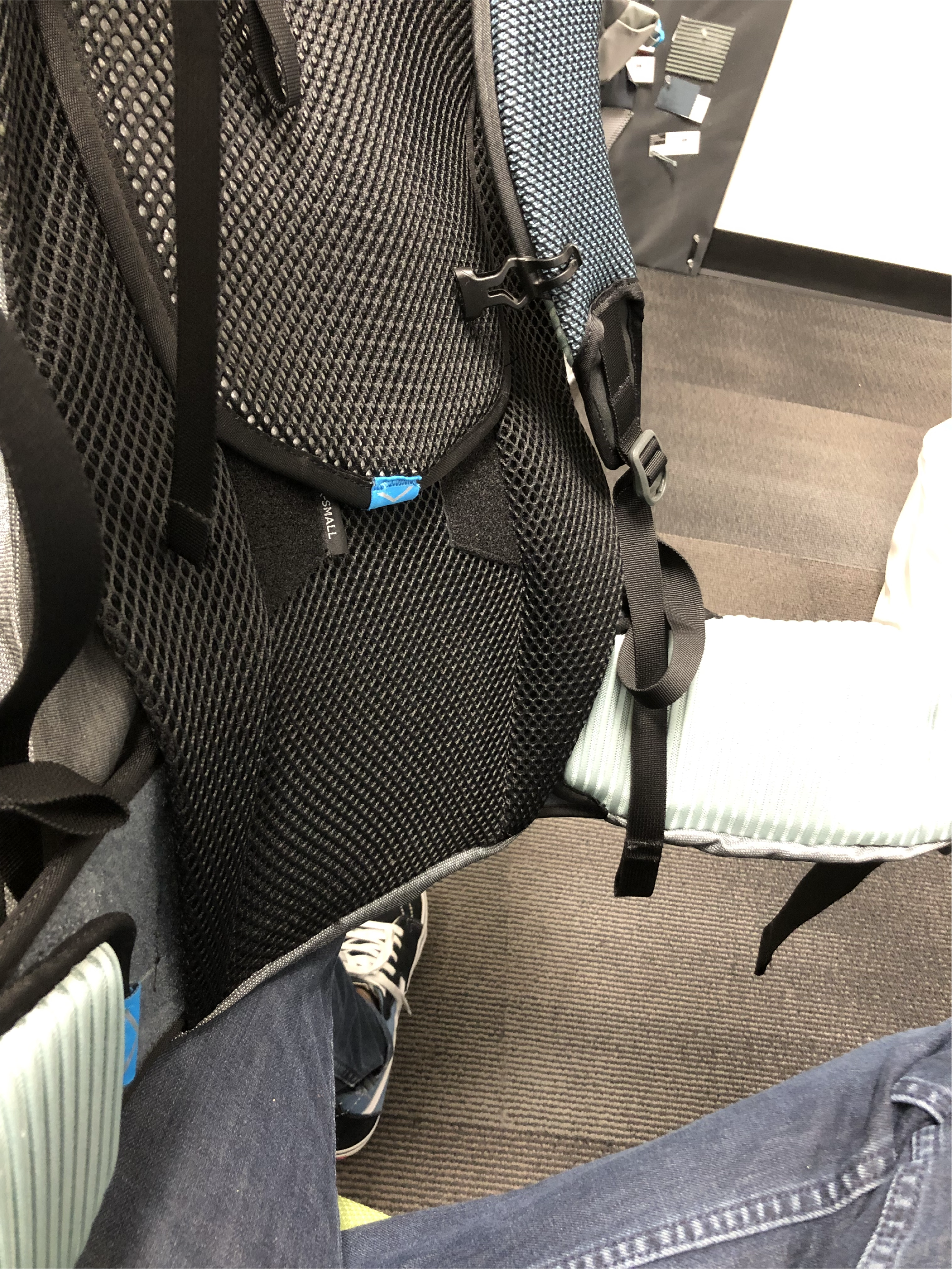
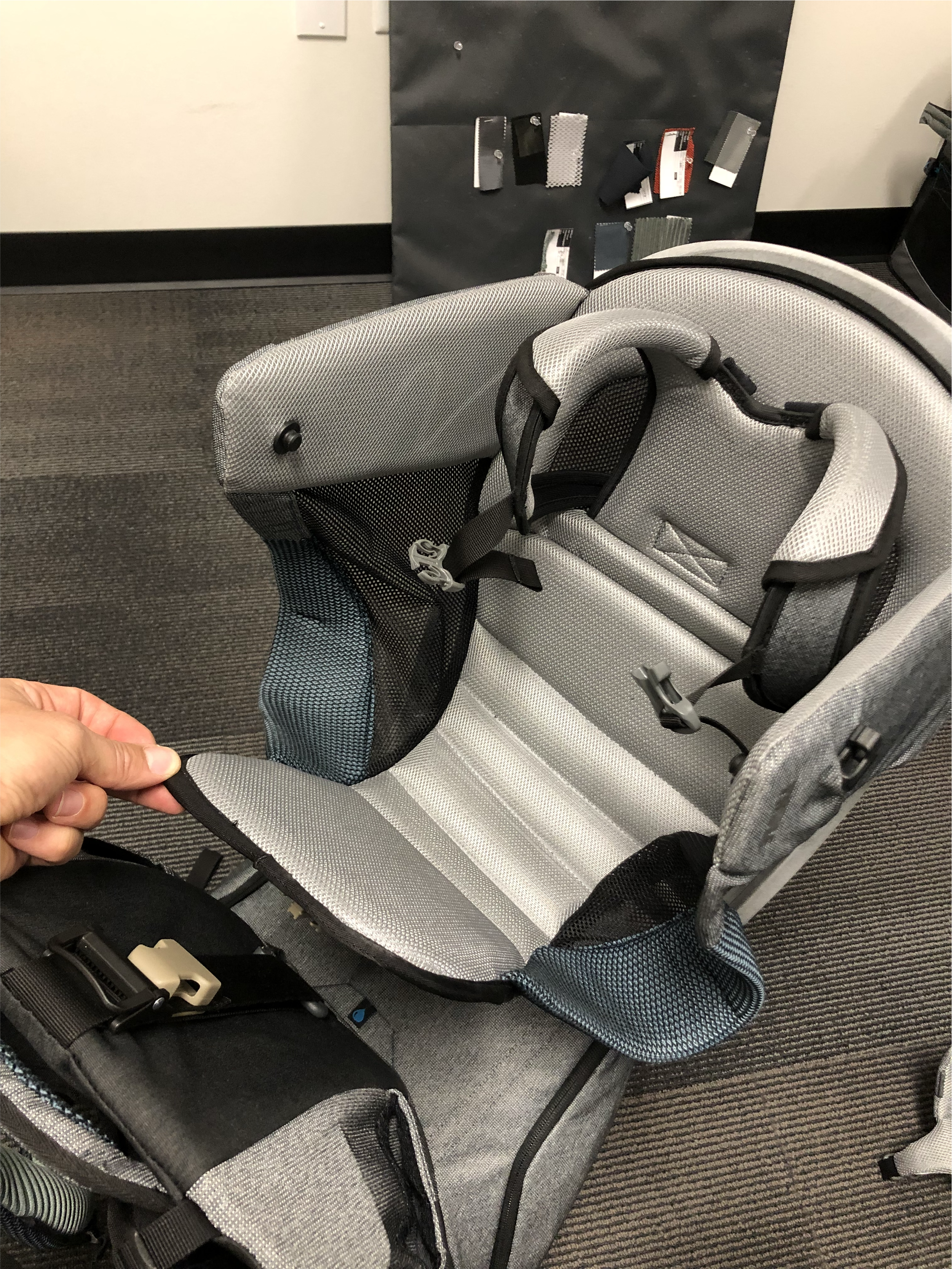
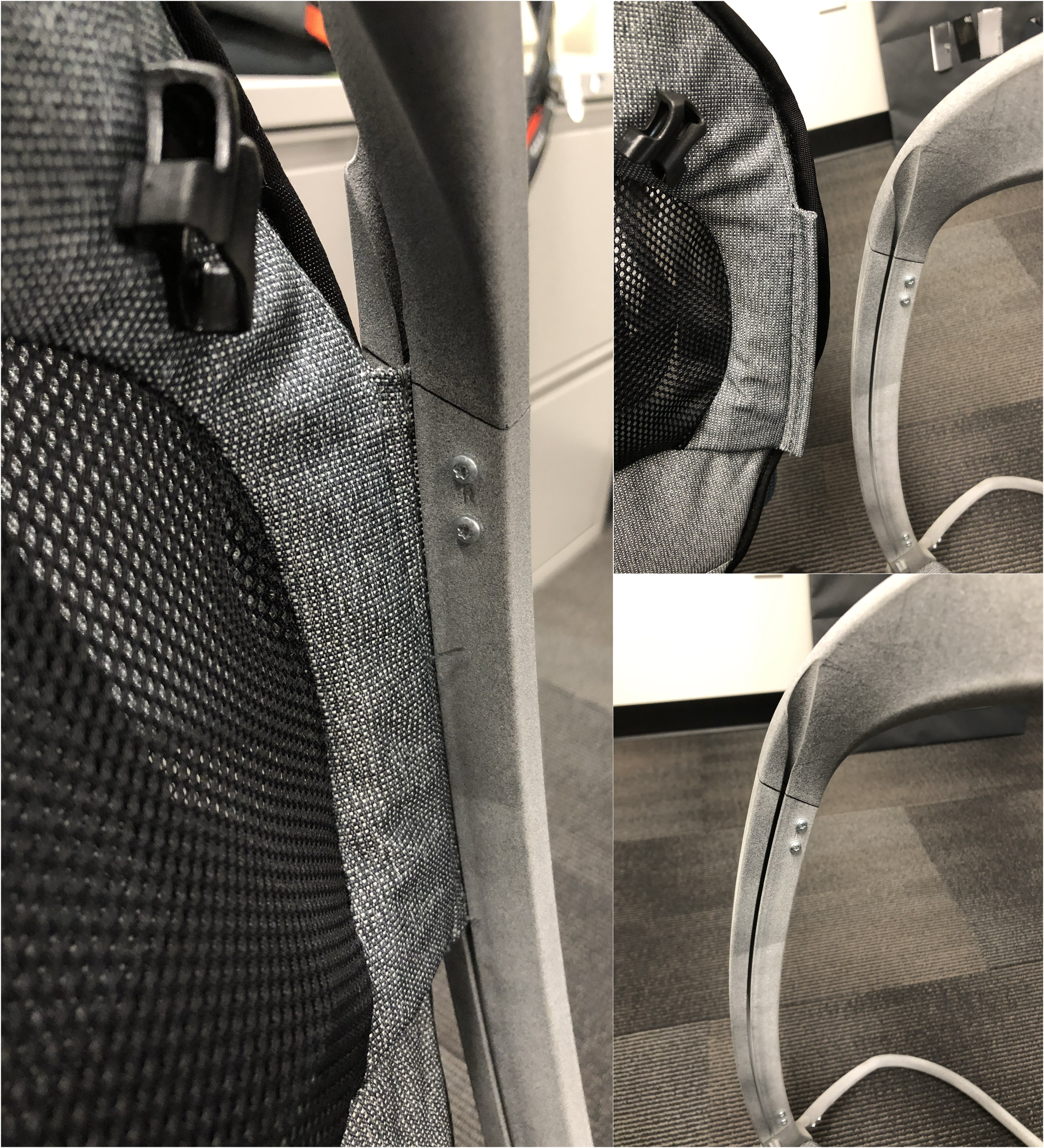
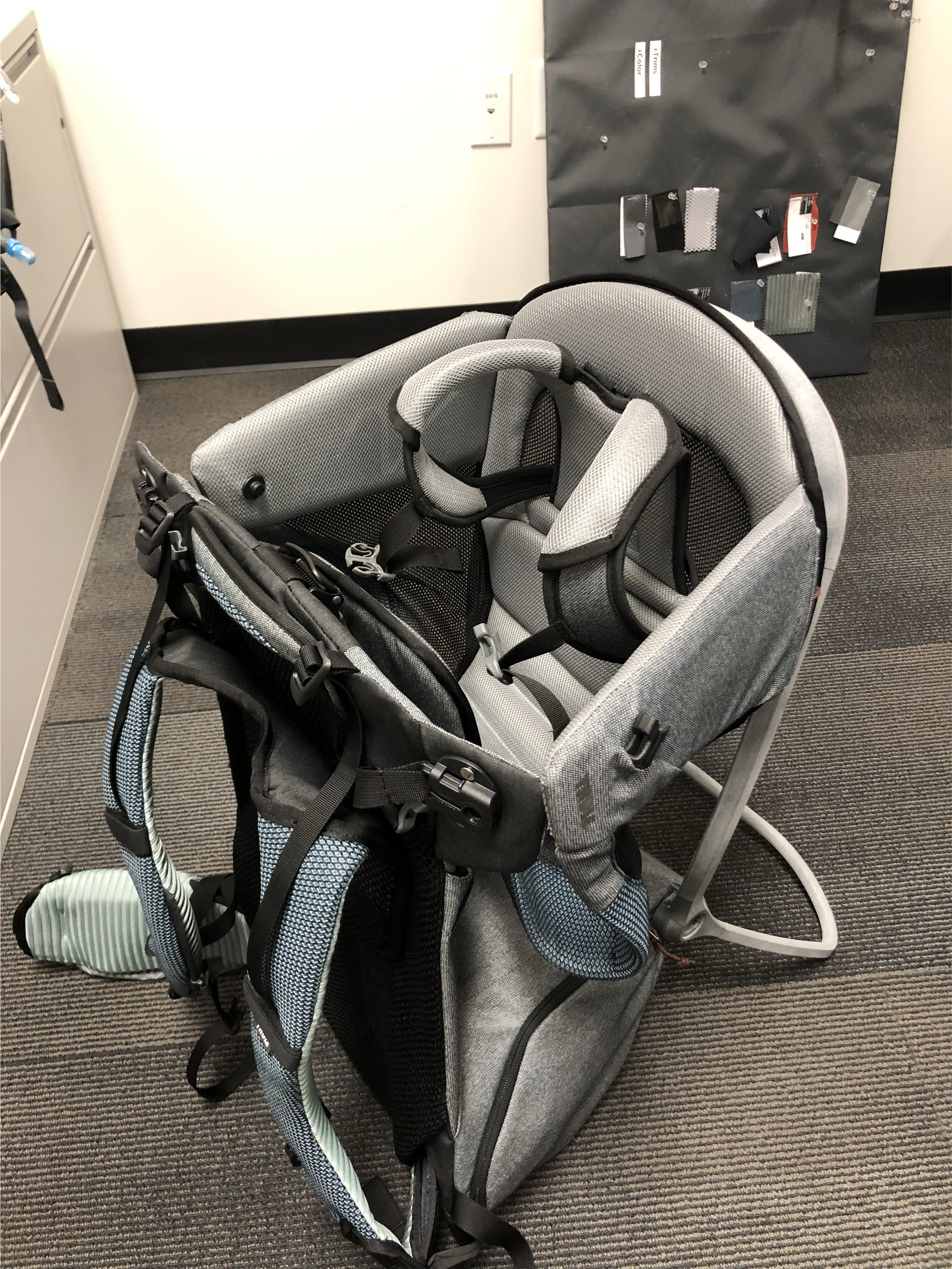
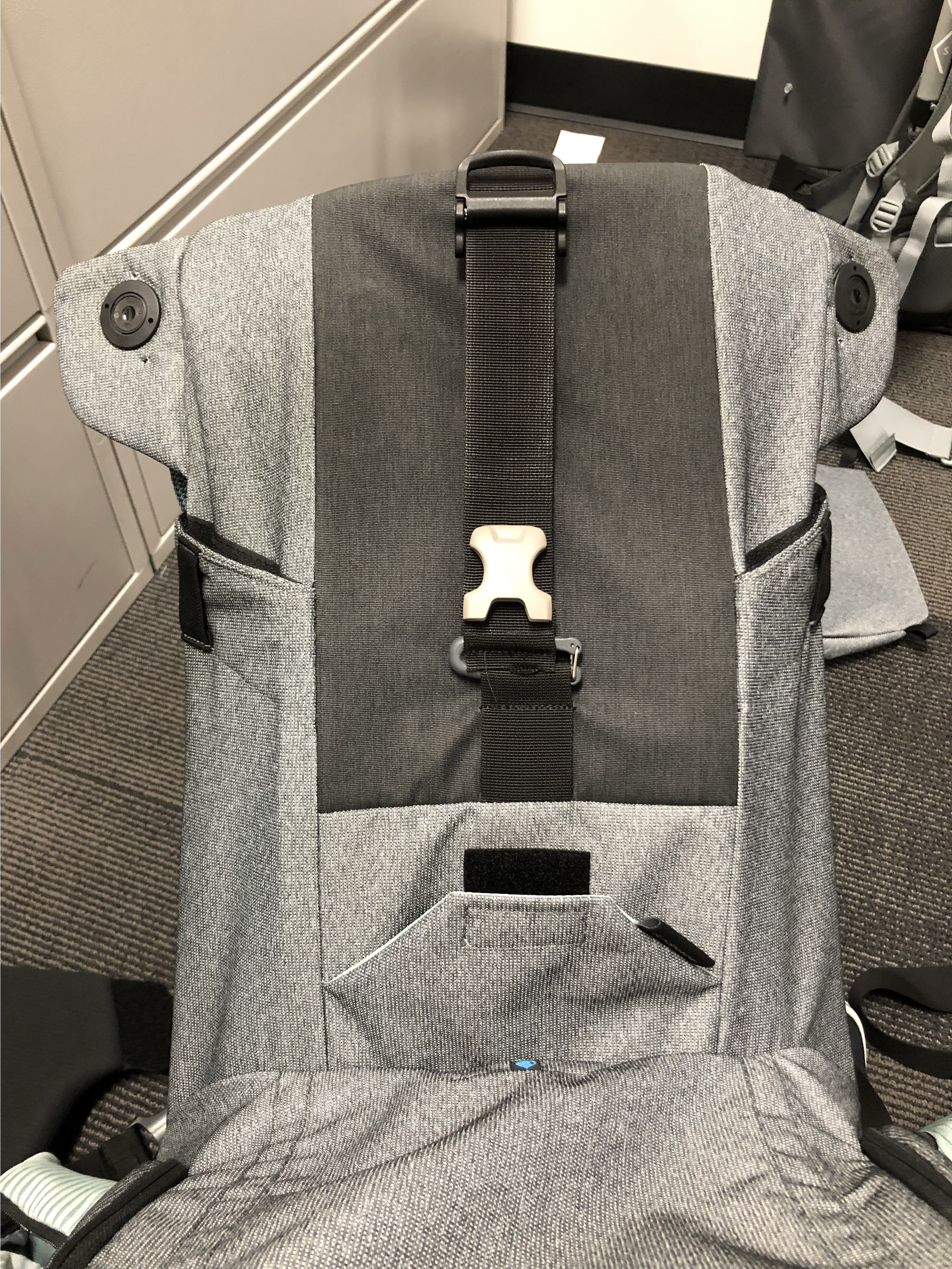
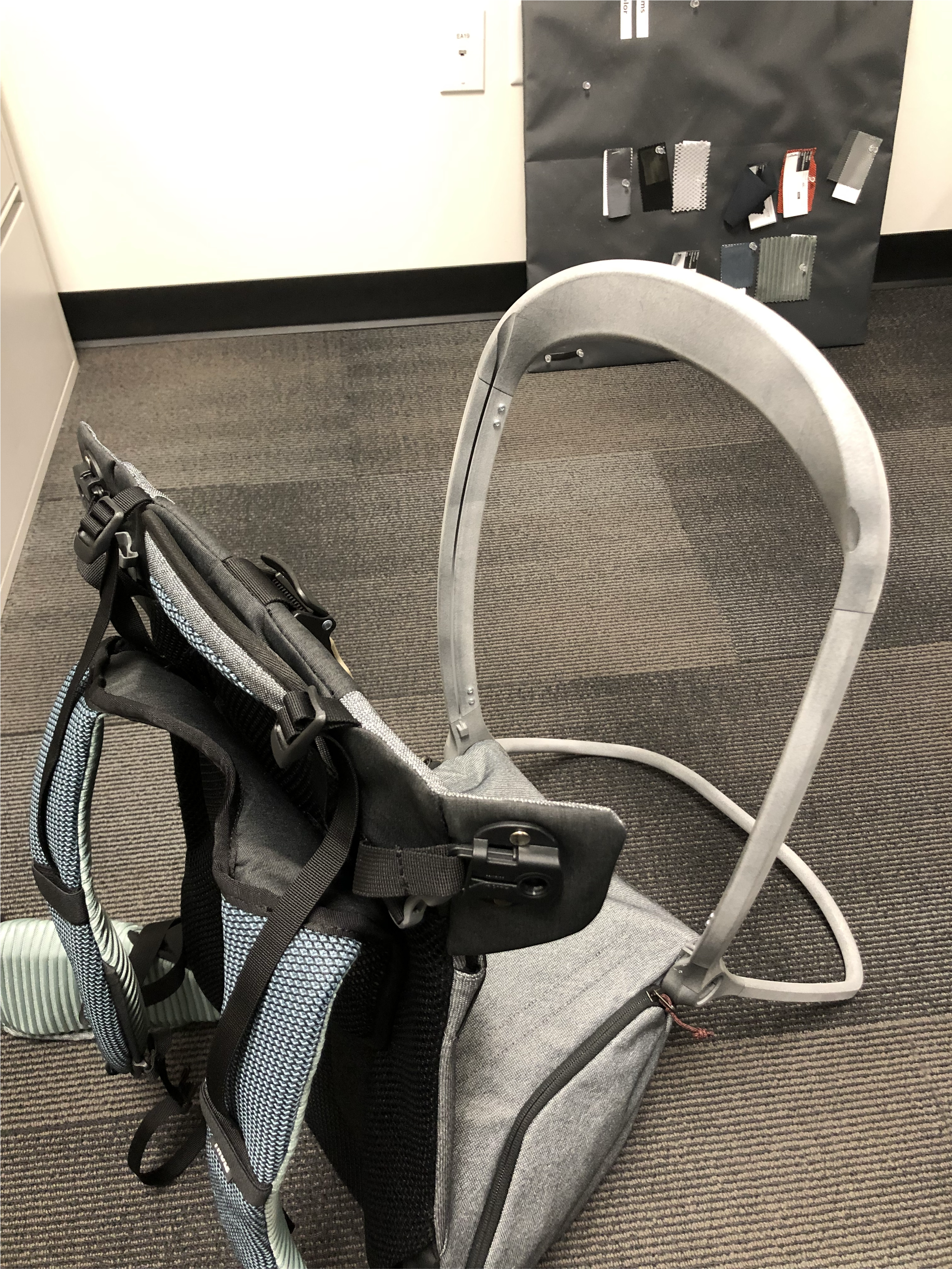
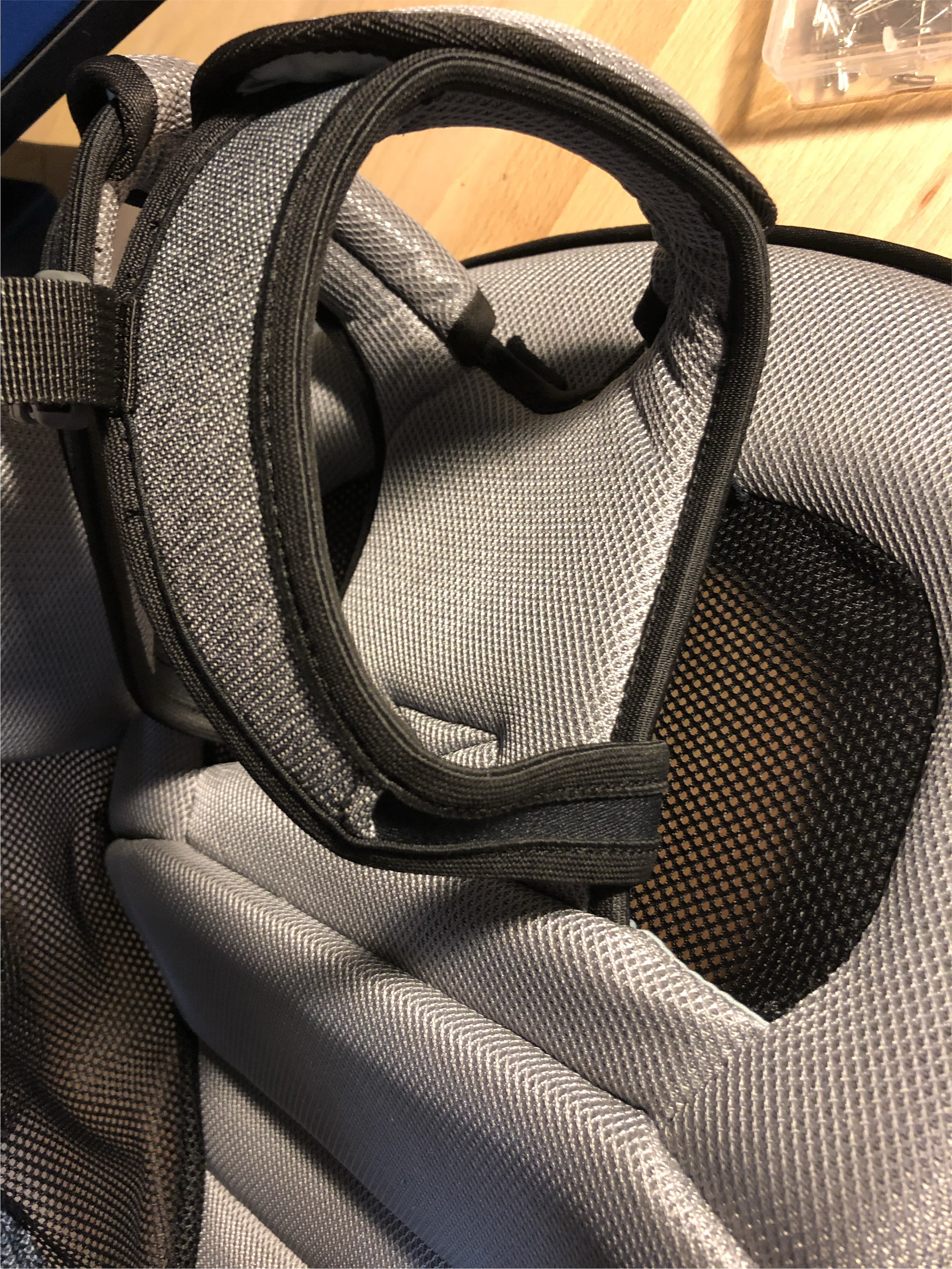
The first sample left a lot to refine, but basic functionality and fit were all testable. For such a complex assembly, the early and simple prototyping saved us months of sample room resources, as our big functional problems had already been solved.
Final Product Direction
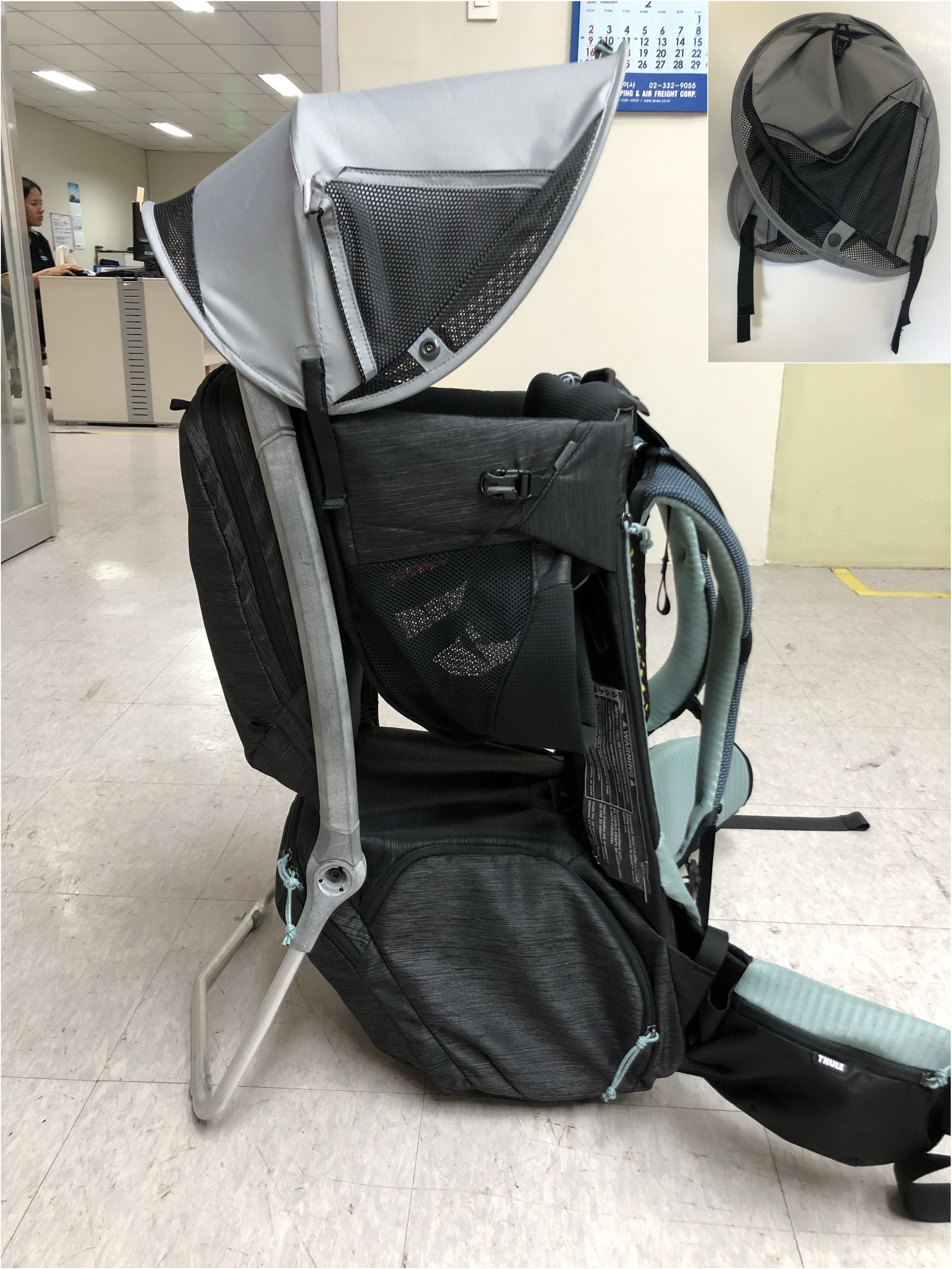
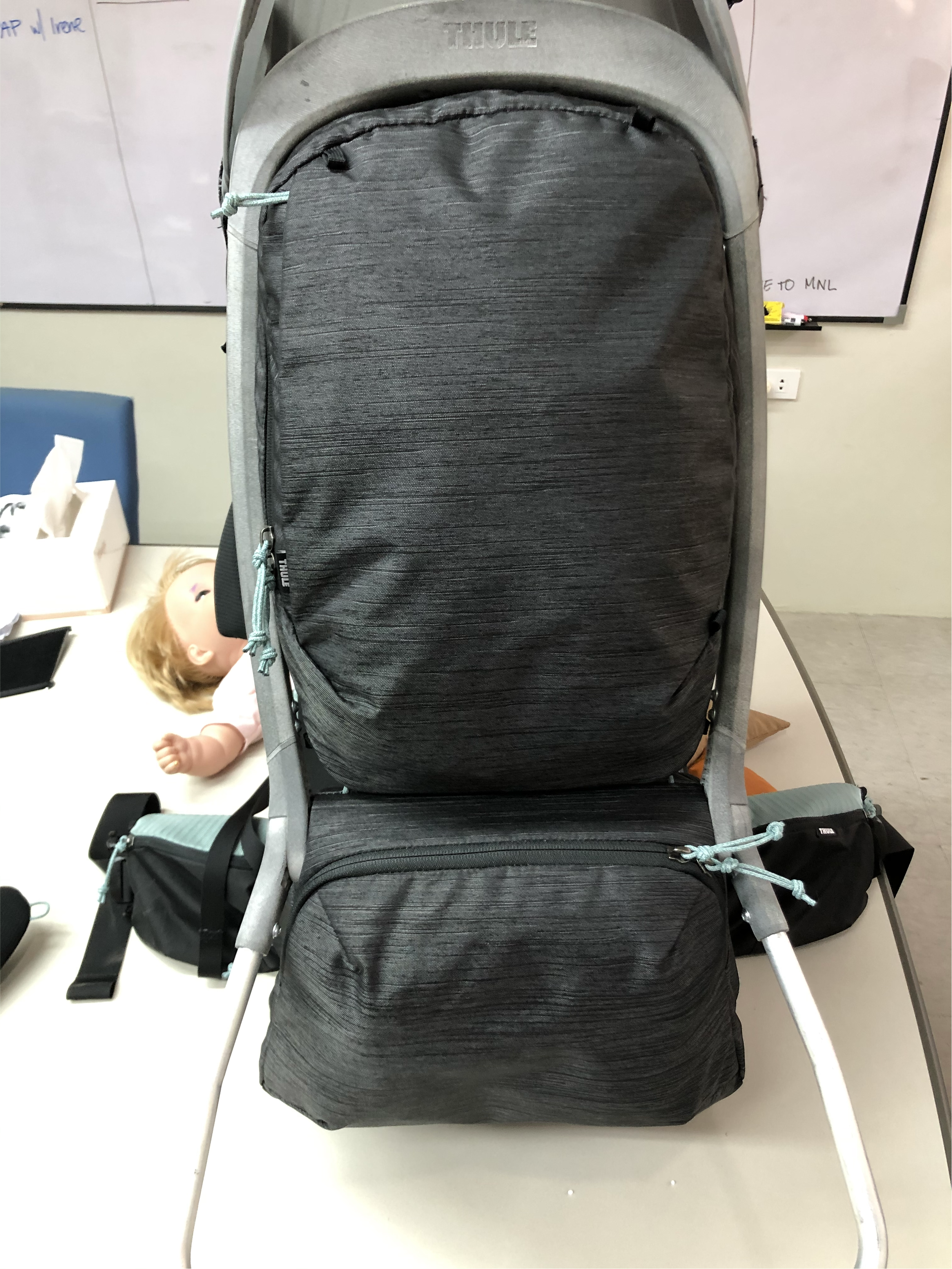
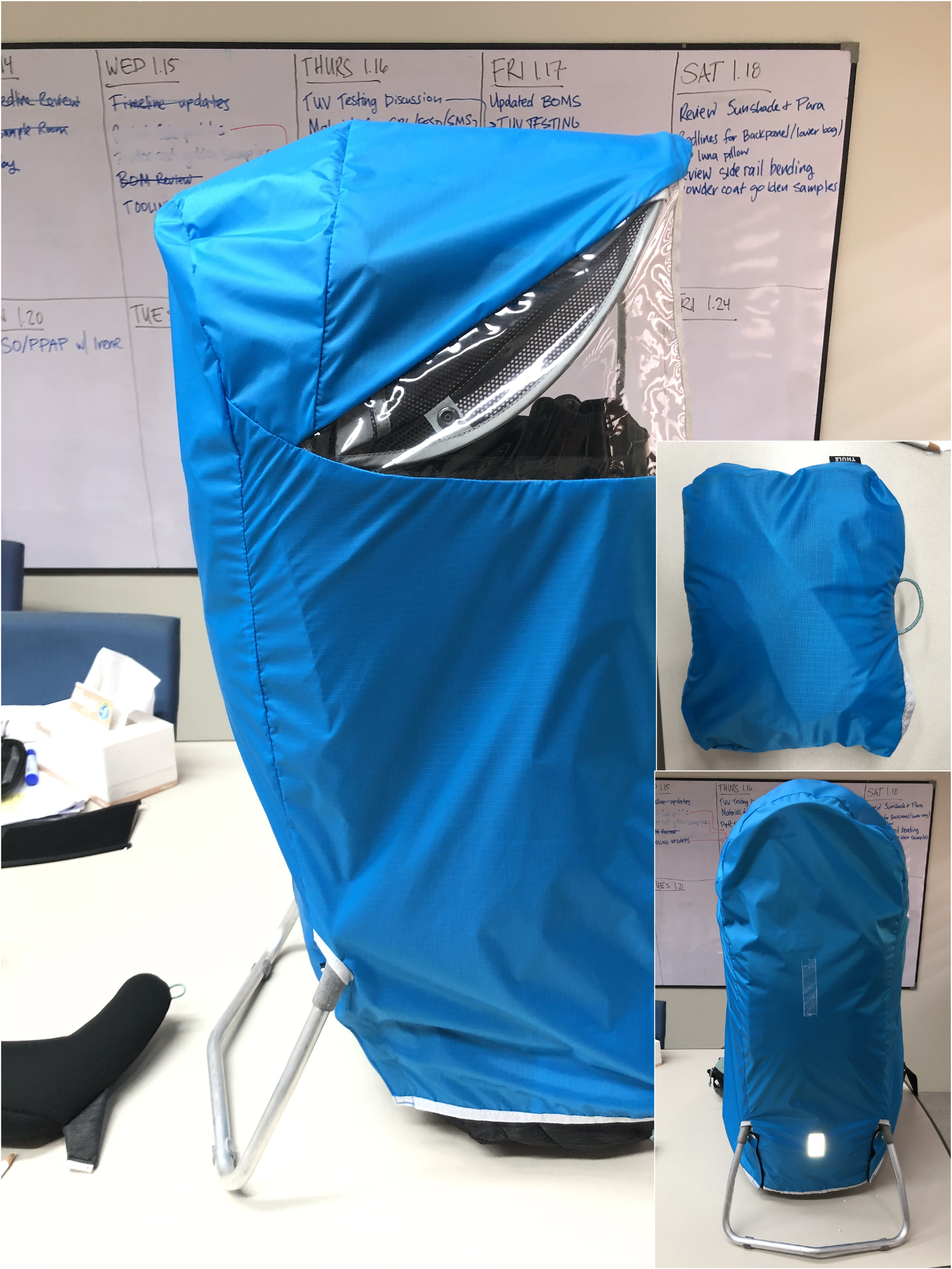
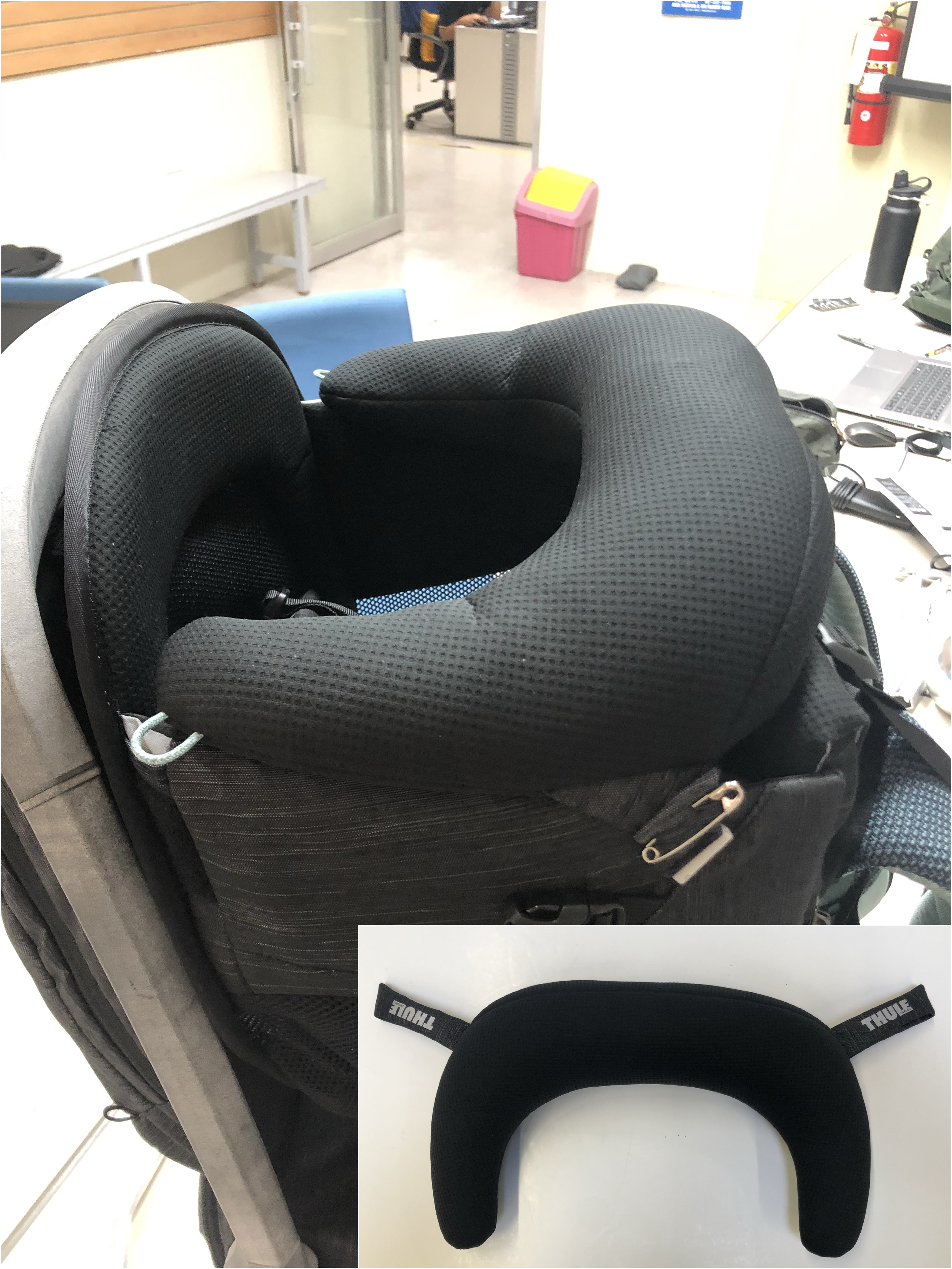
After 5 sample rounds, the accessories were added and the product direction finalized. Accessories include a sleeping pillow, sunshade, raincover and additional sling bag that quickly integrates into the form of the frame.